




cb.web.local

twitter Facebook linkedin acp

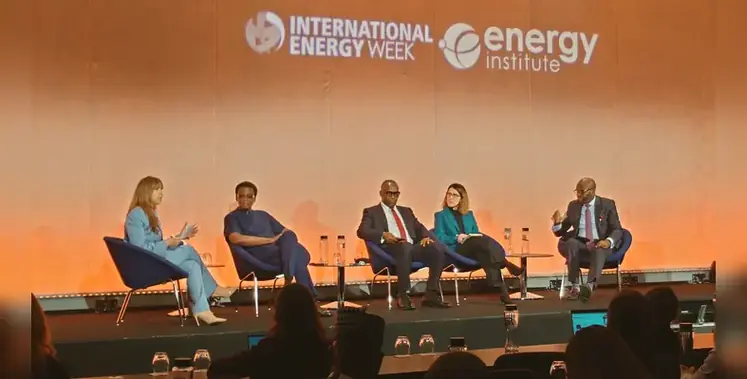
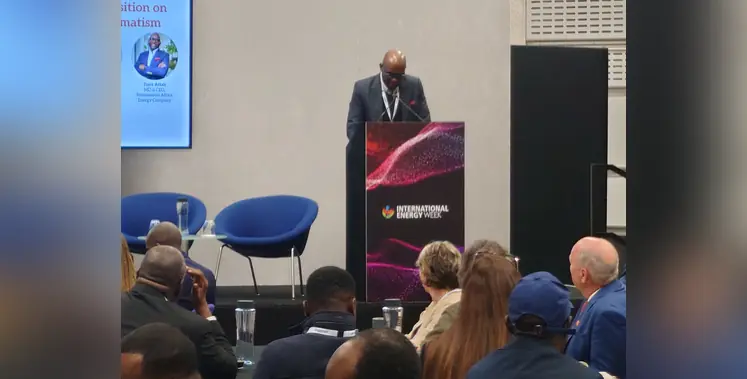
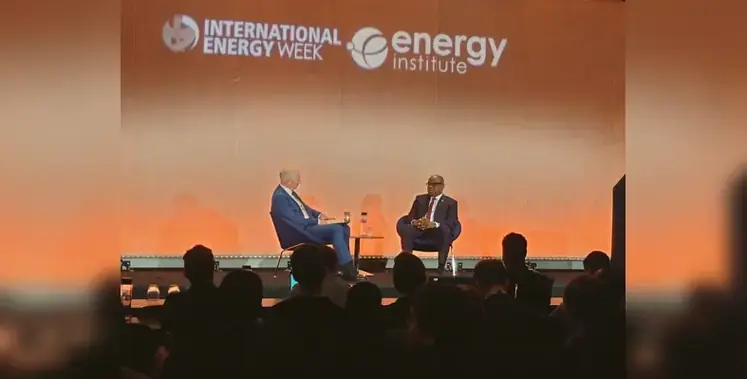
The panel's theme was 'Africa's energy transition on African terms'.
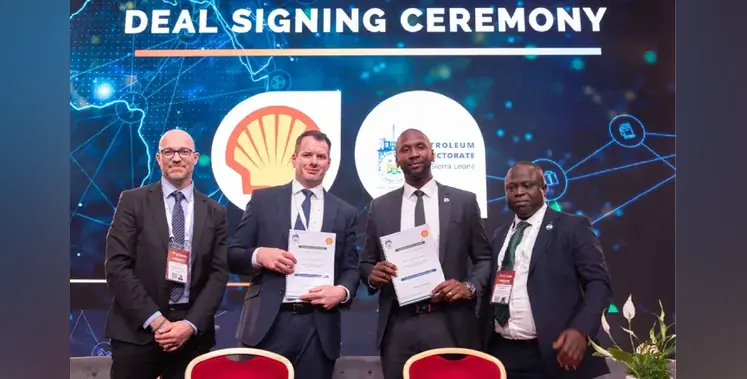
Crystol Energy's founder and chief executive officer, Dr. Carole Nakhle, moderated an Africa-focused panel during the recently concluded International Energy Week in London to get a perspective on the continent's stand on decarbonisation and energy transition practices
"It's not saying that decarbonisation should be ignored, but the truth is, you can't decarbonise what you don't have. If you don't have energy, you can't be talking about decarbonisation. You have to have the energy faster than you decarbonise," said the Nigerian National Petroleum Company's chief financial officer, Adedapo Segun, in the context of poor energy access in Africa

Segun's case was further supported by Renaissance Africa Energy Company's managing director and chief executive officer, Tony Attah, who said that with a teeming youth population, Africa cannot compromise on industrialisation. "I think it's a no brainer that from an African lens, from a Nigerian lens, industrialisation is what will move people out of poverty. We want to be given the flexibility to use the same resources to achieve what Europe and the rest of the world has achieved. From an African lens, it's survival first. I haven't survived. You're asking me to make a choice. It's about the industrialisation of Africa...when you talk about the whole emissions and impact on climate, data suggests that the entire Africa is contributing way less than 4% so essentially, we can even carry on at two, three times the scale today, and it will not be of any significant impact," Attah said.

While Dr. Nakhle was all ears, she stressed Africa's responsibility to eliminate flaring for sustainable production. "Just by increasing the penalty on gas flaring, you motivate the companies to actually still produce oil and gas with lower carbon intensity, because I think that would be the winning step for the future, and not to continue with what was a good old fashioned way of producing oil and gas."

According to Attah, flaring has been a focus area for most creditors as part of decarbonisation strategy, which aligns with attaining zero routine flare by 2030. With engineers working on projects to deal with gas storm compression infrastructure that are capable of moving gas from flood centres to the market, there has been a massive reduction in flare now. 

Gas is already driving Africa's energy narrative, with around 620 trillion standard cubic feet coming solely from Algeria, Mozambique and Nigeria. The world has come to Africa with massive investments, not just for international market but also the domestic market. The nation is hence way past the stage of "making a case", as now its just a matter of the investments unleashing the potential that is trapped in all these countries.

"Gas is going to be the game changer for us. So we are looking to develop our gas resources and export the gas to derive the financing for developing the country, and bridging the infrastructure gap," said AGPC's managing director, Effiong Okon, as he gave some perspective on Nigeria's national budget against the infrastructure budget of European countries.

"We have a budget of just about 20 something million dollars. That is for the whole country, and 45% of that goes to debt service. Another 15% goes to security. So you have 60% of the budget locked in debt service and security. And with that, you really cannot build infrastructure. You need to improve the standard of living. It becomes impossible. I checked on some of the European countries, Germany, for example, for just for infrastructure in 2026 [it is] going to spend close to US$200bn. So we really need to find the prosperity to develop," he said. 

Dr. Nakhle also raised the question of Africa's biggest paradox. "Africa is rich in energy resources, and yet it is poor when it comes to energy consumption. What do you think needs to change to change this reality on the ground?" she asked.

Attah's answer was that Africa is looking at a typically extractive industry when it comes to oil and gas. While the resource belongs to the nation, it was entirely under the control of international oil companies. Due to this structural dislocation, IOCs will extract, go and develop their respective countries with it. But now with majors announcing massive divestments on the back of onshore maturation, companies like Renaissance were feeling the heat. "But I have to thank NNPC for just supporting the divestment to go through. So we bought the share assets, and you can imagine that our philosophy and vision will be different from that of an IOC. We have a very audacious vision to be the African leader in energy. The IOC will not want to be the African leader in energy. They want to be the global leaders, but we want to be the African leader in energy. We want to enable energy security, [and] we want to bring about the industrialisation of Nigeria. Now that was not an assignment for the IOC...We are now taking our destinies in our hands to the extent that we will have no choice than to ensure that that shared prosperity from this energy resource base changes the narrative. On behalf of Nigerians, starting from Nigeria, pivoting to rest of Africa, which is why we like to say as Renaissance, we were made in Nigeria, built for Africa," he said. 

On the energy transition front, Silvia Macri, Middle East and Africa lead, Power & Renewables, S&P Global, said, "If you think about diversification, some countries in western Africa, Kenya in eastern Africa, are pushing either away from a fossil fuel heavy energy mix, or diversifying the sources, instead of having one major source of the produces, power or energy for the country; just choosing all the different options that are available. And this is something that South Africa, for example, has started doing at a faster pace. Kenya is probably the country where this has happened at the highest level, because it has a huge availability of geothermal resources, which allowed the diversification into renewables, but western African countries are bringing gas generation in the mix together with renewables...going forward, [it is important that] the decisions that they're making are more for the longer term, and they're not just solving the problem that is immediate."


Top Stories

Grid List

Petralon 54 has revamped its production capacity significantly. (Image source: Petralon Energy)

Exploration

Petralon Energy is an African exploration and production company with proven capacity to acquire, develop, finance, and operate oil and gas assets

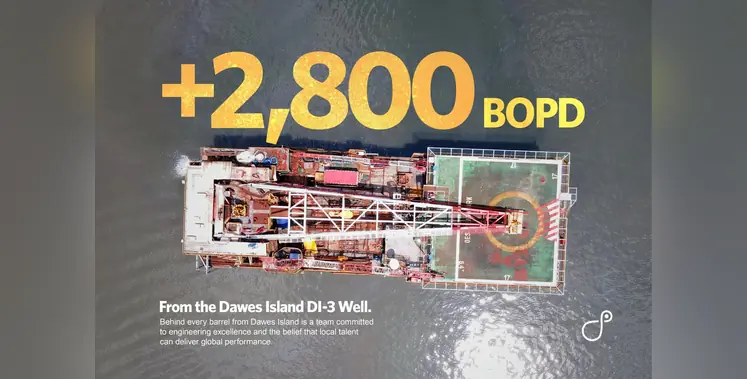
Operating through its subsidiary Petralon 54, the company holds a 100% working interest in the Dawes Island Field in the Eastern Niger Delta.

In just under six months, Petralon 54 has revamped its production capacity significantly through its recently established DI-3 well. Operations began on 14 March 2026 and has since delivered average additional daily production of approximately 2,800 barrels of oil per day (bopd), bringing the field's combined production capacity to approximately 4,800 bopd.

DI-2 has been onstream since October 2025 and DI-3 builds directly on the performance of its predecessor. Together, the two wells have sustained back-to-back drilling programme on a field that was non-producing at the time of Petralon's acquisition in 2021. Till date, the company has exported over 350,000 barrels of oil from the field via the Bonny Oil and Gas Terminal, which is located around 30km from the field. The DI-3 well became operational with zero lost-time incidents and it reflects the company's commitment to world-class health, safety, and environmental standards across its operations.

Dawes Island is located approximately 15km from Port Harcourt in the Eastern Niger Delta. The island covers roughly 46 sq km and holds an estimated 17.6 mn barrels of recoverable oil. “Our success at Dawes Island was built on the conviction that Nigerians could acquire, develop, and operate world-class energy assets. That conviction once required courage, today, it stands on proof. The easy thing after DI-2 would have been to pause, but the determination and resilience of every single member of the Petralon team drove us forward, and DI-3 is the result of that effort. Progress like this is only possible through the strong collaboration we have built with our host communities, our regulator, and our partners. This is only the beginning of what Dawes Island can deliver," said Ahonsi Unuigbe, founder and chief executive officer of Petralon Energy.

Through the commencement of DI-3 production, Petralon Energy validates another major step in the phased development of Dawes Island. The company stays focused on growing production, strengthening its position as a leading indigenous operator in Nigeria's upstream sector, and advancing its longer-term ambition for the field.

Sierra Leone has been working consistently to attract investment for its upstream sector. (Image source: Invest in African Energy)

Geology & Geophysics

Oil major, Shell Exploration Company BV, has secured interests in Sierra Leone with the signing of Reconnaissance Permit Agreement through the Petroleum Directorate of Sierra Leone (PDSL) during the Invest in African Energy 2026 Forum in Paris

Aligning with the country's strategy of derisking frontier acreage, the agreement allows Shell the rights to initiate advanced geological and geophysical studies across offshore G-Blocks that adds up to approximately 20,594 sq kms. The major will conduct seismic data quality control and interpretation, integration of well data, detailed petrophysical analysis, basin modelling, petroleum systems evaluation, identification of structural traps and reservoir fairways, and play-based exploration and prospectivity mapping.

“This agreement with Shell marks a defining moment in Sierra Leone’s journey to responsibly unlock the value of our natural resources. It sends a strong and credible signal to the global investment community… that Sierra Leone is open for business, underpinned by transparency, stability and strong governance,” said President Julius Maada Bio in a statement released by PDSL.

A major of Shell's kind will bring to the region the advantages of high-quality seismic data and advanced subsurface imaging ahead of future licensing rounds. “Signing this agreement...underscores Sierra Leone’s growing visibility on the global energy stage. Securing Shell as a partner is a strong validation of the work we have undertaken to strengthen our geoscience database and regulatory framework," said PDSL director general Foday Mansaray.

Sierra Leone has been working consistently to attract investment for its upstream sector by fostering transparent engagement with global operators. Data, transparency and credible partnerships remain central to the region's upstream ambitions. 


The platform supports critical workflows across Azule’s reservoir and planning functions. (Image source: SLB)

Technology

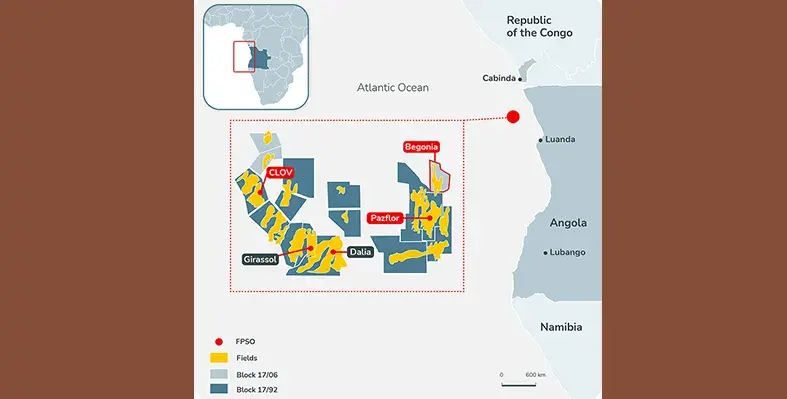
Global technology company SLB has announced a three-year agreement with Azule Energy to extend and enhance the use of its enterprise digital platform across Azule’s operations in Angola

The platform aims to drive more consistent execution, speed up decision-making, and support reliable energy delivery throughout Azule’s portfolio.

Azule Energy, a joint venture between bp and Eni and the largest independent energy producer in Angola, manages some of the country’s most complex assets. This new agreement builds on two years of Delfi use within Azule’s reservoir organization, where the platform supports reservoir studies, modelling, simulation, and well planning workflows, while enabling enterprise-wide digital integration by connecting reservoir workflows with wider operational data environments over time.

“Azule operates large, complex energy assets where execution reliability and consistency matter,” said ND Maduemezia, president, Europe and Africa, SLB.

“This agreement expands the use of an enterprise digital platform that connects workflows and data, strengthening and accelerating decision-making and improving execution predictability in support of reliable energy delivery in Angola.”

The agreement highlights Azule’s shift toward enterprise-scale digital operations, leveraging SLB’s platform and cloud-based capabilities. Implementation is supported through the SLB Luanda Performance Center, which allows digital solutions to be deployed and maintained locally.

The platform supports critical workflows across Azule’s reservoir and planning functions, with gradual integration into broader operational data systems. It also positions Azule to quickly adopt emerging digital and AI-driven technologies, enabling continuous performance enhancements.

Early results demonstrate tangible benefits: integrated workflows, including DrillPlan coherent well planning and engineering solutions, have shortened planning cycles from days to hours while boosting automation and reducing manual coordination.

The enterprise platform strengthens execution consistency across Azule’s large, mature operations, where operational discipline is key to sustaining performance.

The project aims to boost natural gas production.

Gas

In a major step towards the development of its first project in Egypt, Arcius, in collaboration with the Egyptian Natural Gas Holding Company, has reached final investment decision (FID) on the Harmattan gas field in the El Burg Offshore concession area

Approximately half a billion dollars investment by the bp and XRG venture, the project aims to boost natural gas production.

This comes following Arcius’ acquisition of the El Burg Offshore concession area in February 2026. The project's execution phase will be led by ENPPI delivering engineering, procurement, construction and installation (EPCI) contract for Pharaonic Petroleum Company on behalf of El Burg Offshore Petroleum Company. Petroleum Marine Services and Petrojet will be providing services in the capacity of subcontractors.

Speaking on the FID and acknowledging the project's purpose to primarily meet domestic market needs, the chief executive officer of Arcius, Naser Al Yafei, said, "The Final Investment Decision to develop the Harmattan field marks an important milestone in advancing one of our first projects in Egypt toward production. It reflects our confidence in the potential of Egypt’s energy sector and our commitment to close cooperation with the Egyptian government, EGAS, and our execution partners to strengthen Egypt’s natural gas supply, support energy security, and reinforce Egypt’s position as a regional energy hub in the Eastern Mediterranean.” 

The FID was announced during the EGYPES 2026 with the participation of EGAS, Arcius as the Operator of El Burg Offshore Concession, PhPC, ENPPI, and in the presence of Karim Badawi, Minister of Petroleum and Mineral Resources.


The consistent market launches come from optimised production.

Downstream

In line with Nigeria's strategy to expand reach in export market, the Nigerian National Petroleum Company Limited has globally released its new crude grade – Cawthorne 

With an API gravity of 36.4 that denotes the light and sweet kind, the Cawthorne crude rules global market demand because of its unmatched petrol and diesel yields. Comparable to Bonny Light, Cawthorne crude blend is the latest from Nigeria’s basket of crude grades, building on recent additions such as Nembe and Utapate. 

The consistent market launches come from optimised production, helping Nigeria to solidify its base in the export market with diverse offerings. The Cawthorne Floating Storage and Offloading (FSO) vessel, which is strategically positioned offshore Bonny, Rivers State for enhanced energy security and operational efficiency in easy crude evacuation from OML18, comprised the maiden 950,000 barrels cargo for export. Loaded on an MT Eburones vessel, it headed to the Netherlands, and unto the global market. 

As Nigeria aims to attain crude production of three million barrels per day and gas output to 12 billion cubic feet per day by 2030, the international launch of Cawthorne will unlock value from its asset base and deepen market competitiveness.

“This milestone reflects the direction we have set for NNPC Limited—one anchored on execution, partnership, and value creation. We are moving decisively from resource potential to resource monetisation, ensuring that every asset delivers measurable commercial outcomes.

"The successful export of the Cawthorne crude grade is not an isolated achievement; it is part of a broader, deliberate strategy to grow production, deepen market relevance, and strengthen Nigeria’s position as a reliable global energy supplier. We remain firmly focused on delivering sustainable growth in line with national objectives and global market expectations,” said Bashir Bayo Ojulari, Group Chief Executive Officer of NNPC Ltd, as he acknowledged President Bola Ahmed Tinubu’s leadership and OML 18 partners' strong collaboration in achieving the milestone. 

Technological innovation, strategic partnerships, and operational discipline will remain central to NNPC Limited's vision as the organisation works towards value creation from Nigeria's vast hydrocarbons resources.


Christopher Hudson, President of dmg events. (Image source: dmg events)

Event News

Oil Review Africa catches up with Christopher Hudson, President of dmg events, ahead of ADIPEC 2025

Excerpts from an interview: 

Energy across Africa, as elsewhere in the world, is seeing major shifts and advancements. How does ADIPEC 2025 reflect this changing industry landscape and help meet the needs? 

Energy is one of the most dynamic and rapidly evolving sectors. According to the International Energy Agency (IEA), global energy demand rose by 2.2% last year, outpacing the average annual increase of 1.3% recorded over the last decade. At the same time, the global population is projected to reach 9.8 billion by 2050, with over 750 million people still lacking access to electricity, and more than 2.1 billion people remain without access to clean cooking. Rising urbanisation and living standards are reshaping energy demand, with air conditioning alone expected to be one of the largest contributors to electricity demand growth in the coming decades. This reveals the sector’s increasing need to not only produce more energy but to produce it in a way that is equitable and sustainable.

In this context, ADIPEC 2025 is being held under the theme of ‘Energy. Intelligence. Impact’. It reflects a simple but powerful truth: meeting the world’s growing need for secure, affordable and sustainable energy will depend on how intelligently we harness every resource – human, technological and natural – to deliver meaningful results for economies and communities alike.

At its core, the theme recognises that intelligence – both human and artificial – is transforming the way energy is produced, managed, and consumed. From AI-driven optimisation and digital integration to advances in hydrogen, LNG, and decarbonisation, intelligent innovation is reshaping the global energy landscape. ADIPEC serves as the meeting point for these forces, where ideas translate into action and impact can be measured in investment, policy, and progress.

AI is a major topic of discussion in the context of energy, due to its high demand. How is ADIPEC responding to the challenges and opportunities of the AI-energy nexus? 

Artificial intelligence is reshaping both global energy demand and the industry’s ability to respond. Data centres already consume around 1.5% of global electricity, and with AI workloads, that demand could more than double by 2030, rising from 415 TWh to 945 TWh. A single advanced AI model can require as much electricity to train as 100 households use in a year, while an AI query may consume 10 times more energy than a standard search.

This convergence is both a challenge and an opportunity. AI requires enormous energy, but it can also optimise grids, cut waste, improve operational efficiency, and accelerate decarbonisation. At ADIPEC 2025, we have expanded our AI Zone into five experiential areas showcasing how AI is transforming systems, people, and infrastructure. Alongside this, more than 80 conference sessions are dedicated to the AI–energy nexus, from predictive analytics to governance frameworks.

For Africa, this is particularly significant. Many countries are rapidly digitalising while also expanding power systems. The ability of AI to enhance reliability and reduce costs could be transformative for energy access and economic growth.

How is the diversity of the African continent and its vast energy sector reflected across ADIPEC 2025’s programme? 

Africa is a core part of ADIPEC’s community. This year, we are proud to welcome a strong delegation of African ministers and leaders, including those from Nigeria, Kenya, Uganda, Sierra Leone, Zimbabwe, Gambia, Equatorial Guinea, and Egypt. Their participation enriches ADIPEC’s Strategic Conference and exhibitions, ensuring Africa’s perspectives are reflected in discussions on natural gas, hydrogen, downstream, and low-carbon solutions.

dmg events is also the largest organiser of energy and infrastructure events across Africa, with long-standing operations in Nigeria, Mozambique, Kenya, Ethiopia, Ghana, Tanzania, South Africa, Egypt and Morocco. This presence gives us a unique vantage point to bridge African priorities with global dialogue.

Africa holds some of the world’s largest reserves of natural gas, oil, and minerals, as well as enormous potential in renewables. ADIPEC is committed to supporting this potential by convening African voices alongside global leaders, unlocking partnerships that can expand access, accelerate industrialisation, and strengthen Africa’s contribution to global energy progress.

Some of ADIPEC 2025’s notable African speakers include: Honourable J. Opiyo Wandayi, Cabinet Secretary for Energy and Petroleum, Kenya; Honourable Sen. Dr. Heineken Lokpobiri, Minister for State (Oil), Petroleum Resources, Nigeria; Rt. Honourable Ekperikpe Ekpo, Minister for State (Gas) Petroleum Resources, Nigeria; Honourable Chief Adebayo Adelabu, Minister of Power, Nigeria; Honourable Julius D. Mattai, Minister of Mines and Mineral Resources, Republic of Sierra Leone; Honourable Ruth Nankabirwa Ssentamu, Minister of Energy and Mineral Development, Uganda; His Excellency Karim Badawi, Minister of Petroleum and Mineral Resources, Arab Republic of Egypt; His Excellency Antonio Oburu Ondo, Minister of Mines and Hydrocarbons, Equatorial Guinea, Honorable Julius D. Mattai, Minister of Mines and Mineral Resources, Republic of Sierra Leonne; Honourable July Moyo, Minister of Energy and Power Development, Zimbabwe; His Excellency Nani Juwara, Minister of Petroleum and Energy, Gambia; Honourable Cheikh Niane, Deputy Minister of Petroleum and Energy, Senegal, and Mathias Katamba, board chairman, Uganda National Oil Company.