







While the recent withdrawal of the United Arab Emirates from OPEC reflects longstanding tensions over production quotas and strategic direction, its implications extend far beyond the Gulf
For Africa — a continent with both major producers and heavily import dependent economies — the UAE’s exit introduces new uncertainties into an already fragile energy landscape.
Why the UAE left OPEC: The structural tensions
The UAE’s departure did not emerge in a vacuum. Several structural pressures have been building over the past decade:
• Quota rigidity: The UAE has repeatedly argued that its growing production capacity is not reflected in OPEC quotas.
• Divergence from Saudi Arabia: While Riyadh prioritises price stability, Abu Dhabi has increasingly favoured higher output and market share.
• Long-term strategy: The UAE is investing heavily in upstream expansion and wants the freedom to monetise reserves before global demand plateaus.
• Frustration with OPEC+ constraints: The post 2020 production management framework has been a source of friction.
The UAE’s exit signals a recalibration of its national energy strategy — and a potential weakening of OPEC’s cohesion.
Africa’s exposure
Africa’s relationship with OPEC is complex. Some states are members, others have withdrawn, and many rely on OPEC-driven price stability despite not being producers.
The UAE’s exit affects each differently.
OPEC member countries
Nigeria
Africa’s largest oil producer faces chronic underproduction relative to its OPEC quota. A weaker OPEC could mean:
• Greater price volatility
• Reduced collective ability to stabilise markets
• Increased pressure on Nigeria’s fiscal planning
Nigeria’s dependence on oil revenue makes it highly sensitive to any erosion of OPEC’s influence.
Angola
Angola withdrew from OPEC in 2023, citing quota constraints that limited its production ambitions. The UAE’s exit validates Angola’s concerns and may encourage other producers to question the value of membership. Angola, however, remains exposed to global price swings, and reduced OPEC cohesion could amplify volatility.
Algeria
A long-standing OPEC loyalist, Algeria relies on the organisation’s collective discipline to maintain price floors. The UAE’s departure weakens Algeria’s diplomatic leverage and may complicate its efforts to stabilise domestic energy revenues.
Libya
Although exempt from quotas due to conflict, Libya is highly vulnerable to price instability. The UAE’s exit increases uncertainty in global markets, complicating Libya’s recovery planning and investment climate.
Equatorial Guinea, Congo, Gabon
These smaller producers have limited buffers and depend heavily on OPEC’s collective bargaining power. A weakened OPEC reduces their ability to influence global markets and exposes them to sharper price cycles.
Non OPEC member countries engaged in production and refinery
Egypt
Egypt is a net importer of crude. Its refining sector and domestic energy pricing are sensitive to global price movements. Increased volatility could:
• Raise import costs
• Strain fiscal budgets
• Affect electricity and transport pricing
Egypt’s exposure is indirect but significant.
Sudan and South Sudan
South Sudan depends on oil for the majority of its national revenue, exporting through Sudanese pipelines. Both states rely on predictable global prices to maintain budget stability. Increased volatility could:
• Disrupt pipeline fee arrangements
• Reduce government revenue
• Complicate debt and fiscal planning
Their vulnerability is structural and immediate.
South Africa
South Africa’s closure of its refineries and conversions to import terminals made it a major importer of refined petroleum products and relies heavily on global price stability. The UAE’s withdrawal from OPEC could increase price volatility, affecting transport, electricity generation and industrial production. With several refineries shut down or converted to import terminals, South Africa’s exposure to global price swings is significant.
Mozambique
Mozambique is emerging as a major gas producer but remains a net importer of refined petroleum products. LNG projects depend on stable global markets and investor confidence. Increased volatility could affect project timelines, financing and long term offtake agreements.
Namibia
Namibia is on the verge of becoming a major oil producer following recent offshore discoveries. For now, it remains import dependent. Price volatility affects domestic markets, but long term, a weakened OPEC could influence Namibia’s future production strategy and investment climate.
Ghana
Ghana is both a producer and importer of refined products. Price volatility affects fiscal planning, refinery economics, and the viability of offshore projects. A weaker OPEC could complicate Ghana’s long term revenue projections and investment climate.
Democratic Republic of Congo
The DRC is a small producer but a major importer of refined products. Price instability affects mining operations, transport and electricity. The DRC’s exposure is indirect but significant due to its reliance on imported fuels and its large industrial sector.
Import-dependent African economies
A significant number of African states rely heavily on imported petroleum products and are therefore highly sensitive to global price movements. For these economies, OPEC’s cohesion matters because it stabilises international markets and reduces volatility. The UAE’s withdrawal introduces uncertainty that could affect inflation, transport costs, electricity pricing and fiscal planning.
This group includes:
• Kenya, Tanzania, Uganda, Burundi, Rwanda - East African economies with growing energy demand and limited refining capacity.
• Senegal, Morocco, Tunisia - North and West African importers exposed to global price cycles.
• Zimbabwe, Malawi, Zambia - landlocked states dependent on regional supply chains through South Africa, Mozambique and Tanzania.
• Ethiopia and Somalia - fully import-dependent economies where fuel prices directly affect food security and transport.
• Botswana and Namibia - reliant on South African and regional supply routes, with limited domestic buffers.
For these countries, a fractured OPEC could mean:
• Higher inflation driven by fuel and transport costs
• Increased food prices due to supply chain exposure
• Pressure on foreign exchange reserves
• Greater fiscal strain on subsidy dependent economies
• Higher electricity generation costs in diesel reliant grids
These states are indirect but significant stakeholders in OPEC stability, and any weakening of OPEC's price management capacity will be felt across their economies.
Continental level risks for Africa
The UAE’s withdrawal introduces several systemic risks:
• Increased price volatility as market coordination weakens
• Reduced OPEC influence, lowering the organisation’s ability to maintain price floors
• More aggressive production competition among producers
• Investor hesitation due to uncertainty in long-term price signals
• Refinery project uncertainty, especially for new African mega refineries
• Fiscal instability for oil dependent economies
Africa’s exposure is both direct (for producers) and indirect (for importers).
Strategic options for Africa
Africa cannot control OPEC dynamics, but it can strengthen its resilience.
To reduce dependence on external market governance, institutions such as the African Petroleum Producers’ Organisation (APPO), African Union and Afreximbank can facilitate:
• regional production alignment
• joint investment frameworks
• coordinated policy responses
Acceleration of refinery expansion and integration can reduce dependence on external market governance. The following projects can bring down import dependence and stabilise domestic markets:
• Dangote Refinery (Nigeria)
• Cabinda Refinery (Angola)
• Uganda’s planned refinery
• Egypt’s ongoing expansions
To avoid the vulnerability of OPEC centric pricing cycles, African producers can diversify export markets and strengthen ties with:
• Asia
• BRICS +
• Regional African markets
Africa can build fiscal buffers such as sovereign wealth funds, stabilisation funds and hedging strategies to help governments absorb price shocks. It can also strengthen local content and value chains so that increased domestic value capture reduces vulnerability to external volatility and support long-term industrialisation.
Africa must not be a passive price taker. The UAE’s withdrawal from OPEC is a reminder that global oil governance is shifting. Africa cannot afford to be reactive. By strengthening regional coordination, accelerating refinery development, diversifying markets, and building fiscal resilience, African states can navigate this transition with greater stability and strategic autonomy.
The article has been written by Elijah Paul RukidiMpuuga, FCIArb (UK), founder and principal, Equitas Dispute Resolution Group, LLC
How does UAE’s OPEC exit impact Africa’s oil and gas?
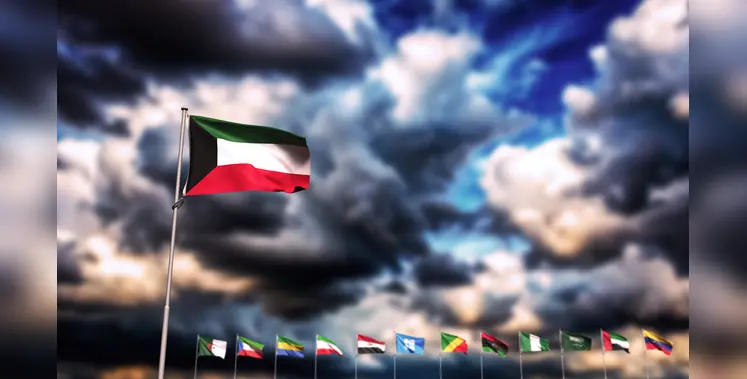
The UAE’s exit introduces new uncertainties for Africa.