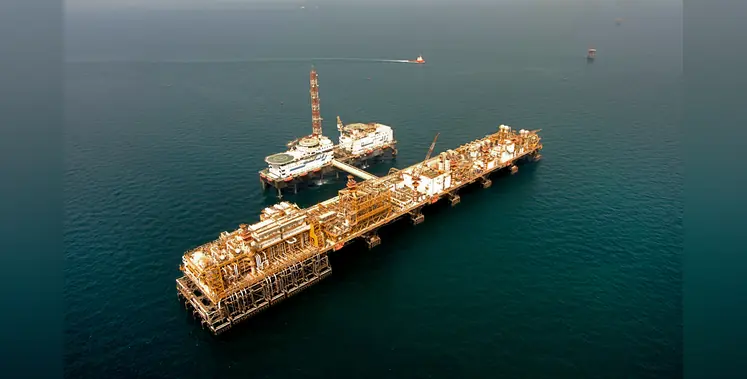
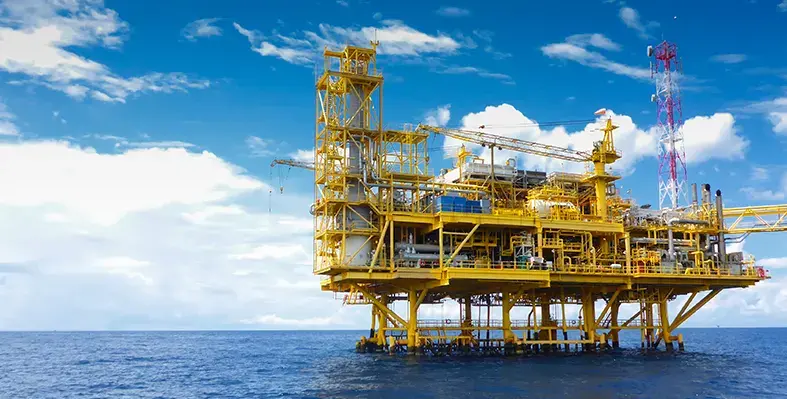
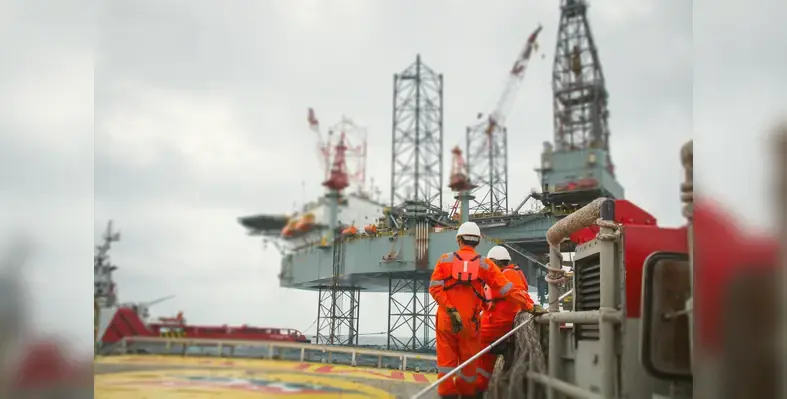
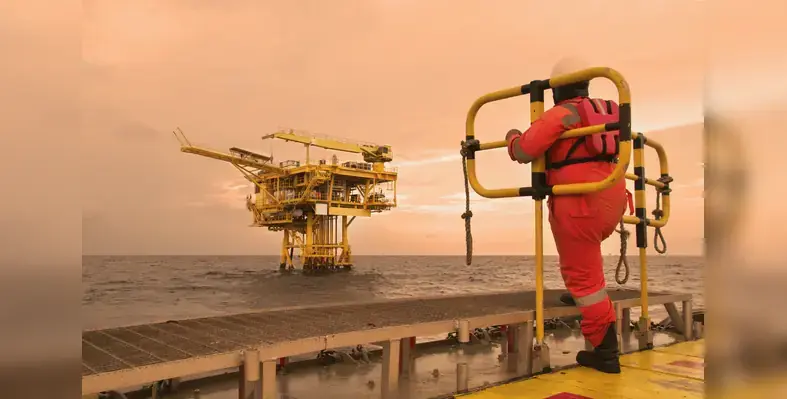
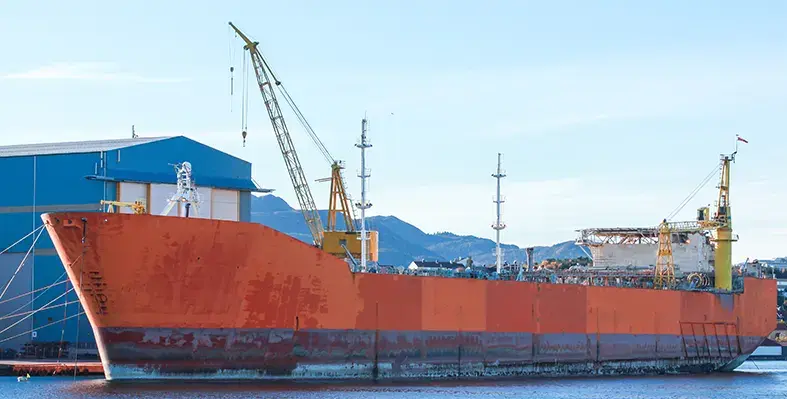
The Agogo FPSO has generated first oil for the National Agency for Petroleum, Gas and Biofuels (ANPG) and Azule Energy, actualising the much anticipated Agogo Integrated West Hub project offshore Angola
This comes in less than three years since the Agogo IWH project began in February 2023, with a phased development approach. It involved appraising-driven process, de-risking the full field exploitation. With a well-coordinated effort to simultaneously manage activities across reservoir, engineering and procurement, the deepwater project is said to have been achieved in record time.
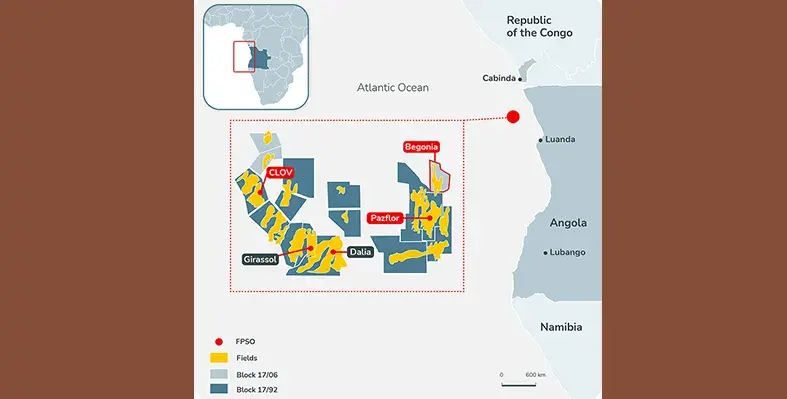
The Agogo project involves the development of two fields, Agogo and Ndungu, in the West Hub of Block 15/06. The Agogo IWH project operated by Azule Energy in Block 15/06, with a 36.84% stake alongside partners Sonangol E&P (36.84%) and Sinopec International (26.32%), is set to add substantial production to Angola's energy landscape. Together, the two fields have estimated reserves of approximately 450 million barrels, with projected peak production of 175,000 barrels per day, produced via two FPSOs (Agogo and Ngoma).
An ode to technological innovation and lower-emissions future, all topsides and marine systems of the Agogo FPSO are designed to be fully electric. Touted as a 'green' FPSO, it features a pilot carbon capture and utilisation/storage (CCUS) unit to recover remaining CO2 volumes. Additionally, the FPSO benefits from combined cycle power generation.
"This new milestone that we have recorded in the Agogo Project reinforces our certainty that we have made the right investment in technological innovation and the valourisation of Angola's natural resources, in an industry where it is essential to combine sustainability, efficiency and inclusion procedures. It is worth highlighting that this is an FPSO prepared to reduce carbon emissions, aligning with energy transition objectives. Furthermore, it demonstrates a strong investment in national human capital, with 80% of the workforce comprised of Angolans,' said the chairman of the Board of Directors of ANPG, Paulino Jerónimo.
"The startup of the Agogo IWH project, sanctioned just months after Azule Energy's formation, represents a defining moment for our company," said Adriano Mongini, CEO of Azule Energy. "It demonstrates not only our technical capabilities but also our firm commitment to supporting Angola's energy landscape. This achievement advances our production goals whilst showcasing our dedication to responsible energy practices through pioneering emission reduction initiatives. We are immensely proud to contribute to Angola's energy future and to set new standards for environmental responsibility in offshore operations."
In The Spotlight
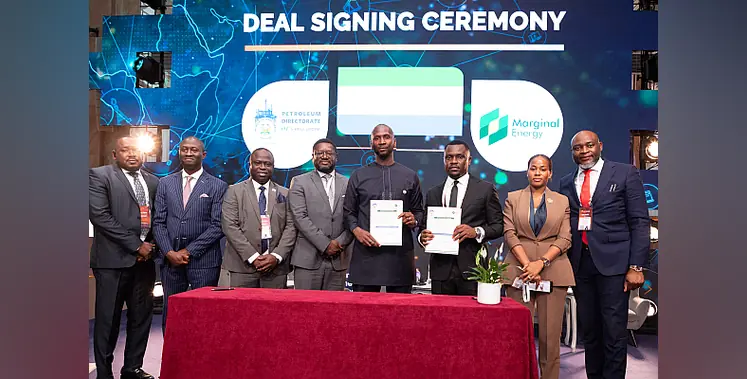
Marginal Energy will initiate a full cycle upstream programme. (Image source: APO Group on behalf of Energy Capital&Power)
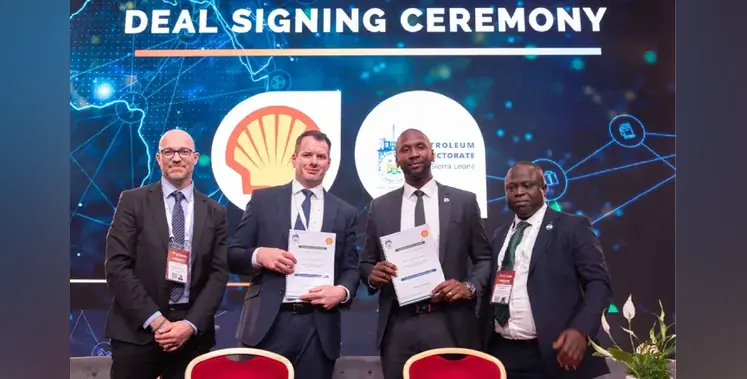
With an aim to boost upstream investment in the region, the Government of Sierra Leone has signed a new offshore petroleum license agreement with Nigerian-based independent energy company Marginal Energy, during the Invest in African Energy Forum in Paris
The agreement gives Marginal Energy the rights to initiate a full cycle upstream programme across five blocks that add up to approximately 6,800 sq km. The Nigerian company will explore, develop and produce the area, within the limits of a fiscal and regulatory framework that caters to investor returns and, in turn, foster national value creation.
PDSL has confirmed that the agreement validates a seven-year exploration period that has been structured to make scope for a minimum work programme with 3D seismic acquisition, advanced geoscience studies and drilling commitments. The company is willing to invest more than US$225mn on the exploration phases.
President Julius Maada Bio said that the agreement is the way to “responsibly harnessing Sierra Leone’s natural resources for sustainable economic transformation,” while reinforcing the country's focus on fostering partnerships with the right investors to see visible progress on the country’s petroleum sector.
PDSL Director General Foday Mansaray described the deal as “an important step in unlocking Sierra Leone’s offshore potential,” emphasizing the country’s focus on transparency and competitiveness. Exploration and production besides, the agreement also stress the areas of local content development, technology transfer and environmental management, as part of Sierra Leone’s broader strategy to ensure long-term economic benefits from resource development.
Marginal Energy, on the other hand, enjoys deep expertise in the Niger Delta, and the new permit gives it a chance to expand its domestic base in the nation. The company's approach is largely driven by technological advances for profit-oriented results, all while maintaining sustainability.
Tullow Oil has stepped into 2026 with a strong financial optimisation strategy in place, building on the previous year's results
In 2025 itself, the company recorded commendable value from limited capital expenditure, with 8 kbopd count from one of the new Jubilee wells brought onstream, and the FPSO at Jubilee and TEN reaching 97% uptime in average. Also it has got on the books US$347mn proceeds from the sales of its Gabonese and Kenyan assets.
For a financially sound delivery of its investment programme and optimum asset value realisation, the company recently completed a comprehensive refinancing transaction, including an extension to its Senior Secured Notes and Glencore facility to November 2028 and May 2030 respectively, and a new US$100mn cargo pre-payment facility with Glencore to provide additional liquidity.
“Throughout 2025 and into early 2026, we have delivered against a clear set of strategic priorities to position Tullow for long-term success. This began with the consolidation of our business to focus on our high-value assets in Ghana, with the sale of our non-core assets in Gabon and Kenya, alongside significant cost reductions. These efforts positioned the company strongly for the successful refinancing, which completed earlier this month with overwhelming support from our creditors. This transaction provides Tullow with the strong financial foundation and flexibility required to deliver value for stakeholders," said Ian Perks, chief executive officer, Tullow Oil plc.
The company is aiming for stronger production generation than usual, encouraged by an overall 43.4 kboepd during the first quarter of 2026. Further material oil and gas reserves have opened up for the company as the Ghanaian parliament ratified long-term extensions for the Jubilee and TEN fields till 2040.
With the acquisition of the TEN FPSO, the company is securing maximum cost efficiency in unlocking future reserves and the long-term development of the TEN and Jubilee fields. This year, an additional four Jubilee wells, including three producers and one water injector, are expected onstream. As part of the current drill programme, Tullow is focussing on well designing and placement backed by data interpretation from 4D and OBN seismic survey.
"We are particularly encouraged by the positive early results from our Ghana drilling campaign...A key milestone has been the agreement to purchase the TEN FPSO, a value-accretive acquisition that significantly improves the field’s economics by eliminating lease costs and providing an opportunity to capture operating cost savings. Additionally extending the Jubilee and TEN petroleum agreements to 2040, and higher oil prices have further strengthened our platform for sustainable growth,” Perks said.
Panoro Energy, alongside its joint venture partners, have received government approval for an amendment to the Dussafu Marin production sharing contract offshore Gabon
The partners now officially enjoy a material time extension of the PSC up to the year 2053, inclusive of three five-year option periods from 2038 onwards.
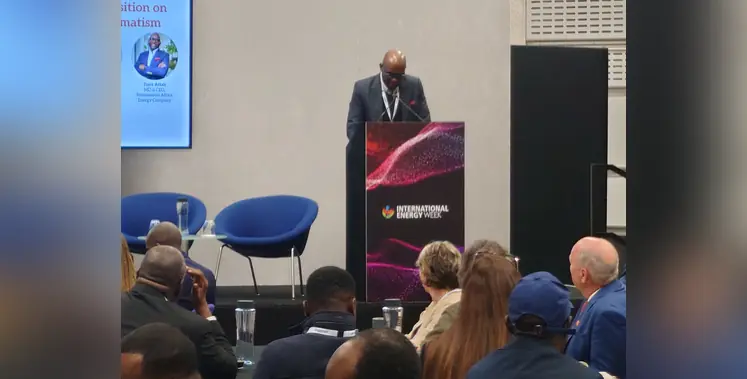
This extension will supoort the partners in advancing future development phases and investments in infrastructure that will yield material economic benefit for everyone involved. It will positively impact Panoro’s 2P reserves at Dussafu in the future.
The extension brings the opportunity to unlock and fully realise the vast exploration and appraisal upside potential of the block, as well as in the adjacent Niosi and Guduma exploration blocks where Panoro holds a 25% interest.
Prior to the extension the PSC duration was until 2038 inclusive of two five-year option periods from 2028 onwards.
Eric d’Argentre, chief operating officer and president of Panoro, said, “We are excited to announce this material time extension of the Dussafu PSC which is a key catalyst towards realising the block’s full economic potential in the coming years by maximising the block’s production of 2P reserves and unlocking the vast resource potential. This very welcome news will allow us to confidently plan future phases of investment, including the Bourdon discovery which the joint-venture partners are maturing towards final investment decision and other as-yet undeveloped discoveries and prospects.
The organic development opportunities at Dussafu are significant, and we continue to be firmly focused on creating maximum value and growth for all stakeholders. We are on-track to commence the four-well MaBoMo Phase 2 development drilling programme mid-year which is expected to return gross production at Dussafu to nameplate capacity of around 40,000 bopd when all new wells are onstream. We have also identified two potential appraisal targets that could be drilled after the MaBoMo Phase 2 wells and offer additional fast-track / cost-effective production opportunities.
I would like to thank the Ministry of Petroleum and Gas, Government of Gabon and our joint venture partners on the collaborative effort in delivering this important extension which stabilises the long-term future of Dussafu allowing us to look forward to many more years of successful operations.”
Panoro holds a 17.5 percent interest in Dussafu.
SNH’s licensing initiative aligns with Cameroon’s broader strategy to optimise hydrocarbon resources.
Five out of nine blocks launched during Société Nationale des Hydrocarbures' (SNH) 2025 licensing round have been offered to winning bidders for production sharing contract negotiations in Cameroon
SNH has confirmed that Octavia Energy Corporation has been awarded the Bolongo Exploration block in the Rio del Rey Basin, while Murphy West Africa secured four blocks in the offshore Douala/Kribi-Campo area: Etinde Exploration, Tilapia, Elombo and Ntem. The remaining blocks – Ndian River, Bakassi, Bomono and Kombe-Nsepe – remain part of the broader licensing round framework following the current phase of evaluation.
Reflecting boosted demand for offshore exploration and brownfield development, Cameroon is the latest in a number of African countries such as Libya or Sierra Leone among others who have recently announced licensing rounds. These fresh licensing rounds are distinguished in their structured, investment-driven approach to re-engage international operators and unlocking underexplored acreage. Cameroon's latest licensing round, in particular, is in line with its strategy of productoion optimisation to address declining output from mature fields, and attract capital and technical expertise to support renewed exploration activity.
The Douala/Kribi-Campo area, where Murphy West Africa will focus its activities, is widely regarded as a highly prospective offshore petroleum province within Cameroon’s broader coastal basin system, with notable gas potential despite being less explored than the Rio del Rey Basin. Meanwhile, the Rio del Rey Basin – home to Octavia’s Bolongo block – remains an established production area with opportunities for redevelopment and enhanced recovery.
SNH’s licensing initiative aligns with Cameroon’s broader strategy of resources optimisation, output stabilisation from declining fields, and attract capital and technical expertise to support renewed exploration activity. This comes amid gradual production declines across legacy assets, reinforcing interest in both offshore gas development and incremental oil recovery opportunities.
At the same time, Cameroon is seeking to strengthen gas monetization pathways and expand domestic energy supply, with growing emphasis on gas-to-power development and broader industrial applications. This strategy is closely linked to LNG development, downstream gas processing and infrastructure expansion – particularly around Kribi – which is expected to support the development of integrated gas value chains. Planned pipeline projects, port upgrades and industrial gas-to-power initiatives are also expected to reinforce midstream and downstream capacity while improving monetization of domestic resources.
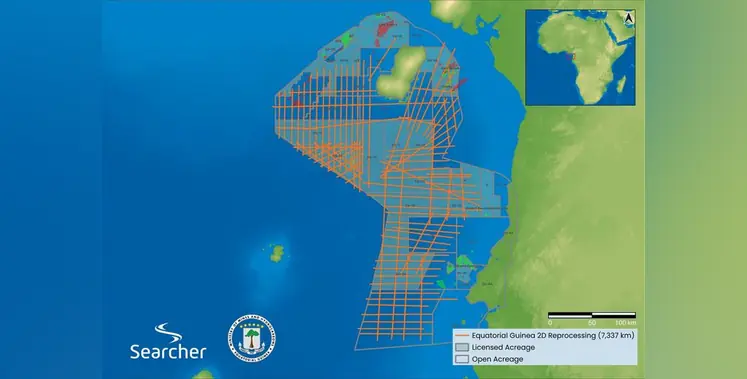
Working closely with the Equatorial Guinea government's Ministry of Mines and Hydrocarbons, Searcher has completed a high-resolution offshore seismic reprocessing project ahead of the EG Ronda 2026 licensing round in April
The Ministry of Mines and Hydrocarbons will be leveraging 7,337 km of data from the project to de-risk exploration efforts so that the region's energy sector can be revitalised with new investments and discoveries.
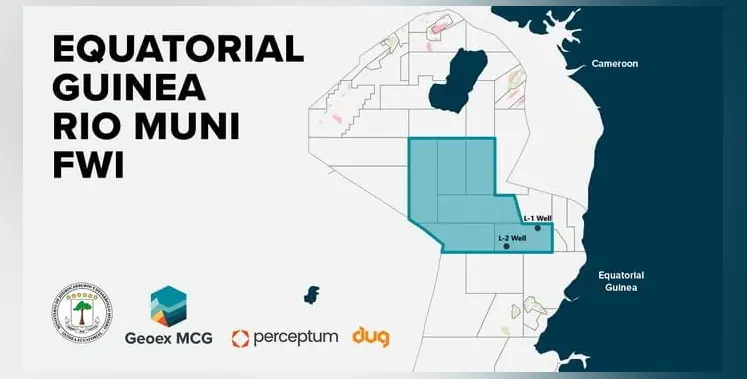
To ensure utmost clarity, the legacy datasets acquired from the project are intercepted using broadband technologies such as Pre-Stack Depth Migration (PSDM) and Full Waveform Inversion (FWI). Companies can expect actionable insights into hydrocarbon systems and potential reservoirs from detailed imagings that unlock complex geological structures.This will make strategic planning in selecting promising prospects easy for clients as they can take control of their decisions awithout having to deal with exploration uncertainty.
Searcher’s managing director, Alan Hopping, claims that the project is a first of its kind in Equatorial Guinea, ensuring clarity and resolution that are potential of fundamentally changing the country's offshore exploration scene. “Our close cooperation with the Ministry of Mines and Hydrocarbons was key to delivering a resource that supports the country’s ambitions and empowers the industry to unlock new opportunities,” he said.
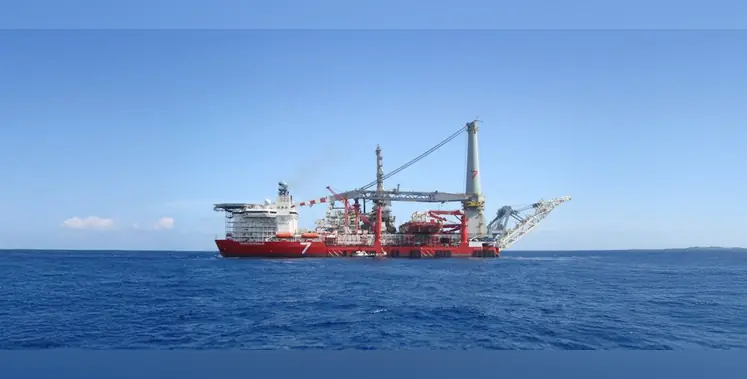
The Aseng Gas Monetisation Project offshore Equatorial Guinea will undergo subsea installation by Subsea7, which has received a significant contract by Noble Energy EG Ltd (a Chevron Company)
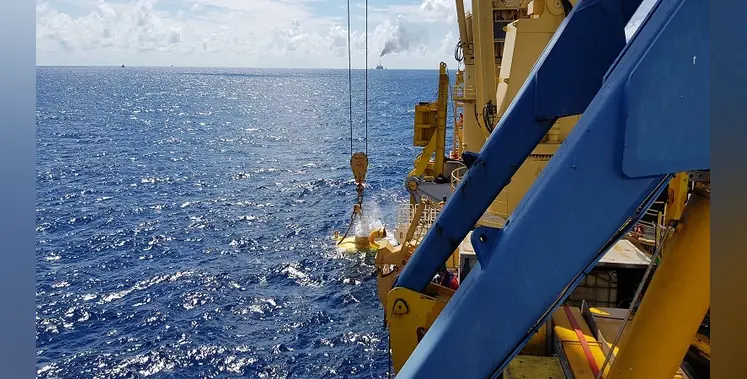
Subsea7 will be establishing a single-well tieback for the project, connecting Aseng field to the existing Alen platform. It will transport and install approximately 19 kilometres of rigid production flowline and 20 kilometres of umbilicals, along with associated subsea structures and tie-ins in water depths of 800 metres.
Project management and engineering will commence immediately and will be managed from Subsea7’s Paris office, with additional support from teams in Lisbon and Equatorial Guinea. Offshore activities are expected to begin in 2026.
David Bertin, Senior Vice President for Subsea7’s Global Projects Centre East, said, “This award represents an important milestone in our ongoing global relationship with Chevron. Subsea7 has operated in Equatorial Guinea for nearly two decades, supporting offshore construction and inspection, maintenance and repair activities. We look forward to continuing our collaboration with Chevron on the Aseng Gas Monetisation Project, continuing to deliver safe, high-quality offshore installation services in West Africa.”
In a major step towards the development of its first project in Egypt, Arcius, in collaboration with the Egyptian Natural Gas Holding Company, has reached final investment decision (FID) on the Harmattan gas field in the El Burg Offshore concession area
Approximately half a billion dollars investment by the bp and XRG venture, the project aims to boost natural gas production.
This comes following Arcius’ acquisition of the El Burg Offshore concession area in February 2026. The project's execution phase will be led by ENPPI delivering engineering, procurement, construction and installation (EPCI) contract for Pharaonic Petroleum Company on behalf of El Burg Offshore Petroleum Company. Petroleum Marine Services and Petrojet will be providing services in the capacity of subcontractors.
Speaking on the FID and acknowledging the project's purpose to primarily meet domestic market needs, the chief executive officer of Arcius, Naser Al Yafei, said, "The Final Investment Decision to develop the Harmattan field marks an important milestone in advancing one of our first projects in Egypt toward production. It reflects our confidence in the potential of Egypt’s energy sector and our commitment to close cooperation with the Egyptian government, EGAS, and our execution partners to strengthen Egypt’s natural gas supply, support energy security, and reinforce Egypt’s position as a regional energy hub in the Eastern Mediterranean.”
The FID was announced during the EGYPES 2026 with the participation of EGAS, Arcius as the Operator of El Burg Offshore Concession, PhPC, ENPPI, and in the presence of Karim Badawi, Minister of Petroleum and Mineral Resources.
In a significant China-Africa trade collaboration, Dangote Industries Limited has signed a US$4.2bn, 25‑year natural gas supply agreement with China’s GCL Group to drive its upcoming fertiliser complex in Ethiopia
Signed in Lagos, the agreement applies for GCL to supply natural gas from Ethiopia’s Calub Gas Field in the Ogaden Basin via a dedicated 108‑kilometre pipeline for the fertiliser facility set to be established in Gode, Somali Region.
Developed along with Ethiopian Investment Holdings, the US$2.5bn plant is expected to become operational from 2029. Following commissioning, the facility will be equipped to produce three million tonnes of urea annually. It will be the largest fertiliser hub in East Africa, capable of covering not only Ethiopia’s import demand but also supply to neighbouring markets.
Calling the deal transformative, Aliko Dangote, president of Dangote Industries, said, “Africa’s energy industry cannot continue indefinitely exporting raw materials while importing finished products.
“Through seamless integration and strategic cooperation with GCL, we will achieve an efficient closed‑loop value chain from natural gas extraction to fertiliser production.”
“This cooperation will expand new frontiers in Ethiopia’s energy, chemical, and food security sectors while transitioning toward a mutually beneficial ecosystem‑based framework,” said GCL Chairman Zhu Gongshan.
The project carries a lot of strategic significance in terms of employment generation, infrastructure advancement, and alignment with global low‑carbon goals.
Oil Review Africa catches up with Christopher Hudson, President of dmg events, ahead of ADIPEC 2025
Excerpts from an interview:
Energy across Africa, as elsewhere in the world, is seeing major shifts and advancements. How does ADIPEC 2025 reflect this changing industry landscape and help meet the needs?
Energy is one of the most dynamic and rapidly evolving sectors. According to the International Energy Agency (IEA), global energy demand rose by 2.2% last year, outpacing the average annual increase of 1.3% recorded over the last decade. At the same time, the global population is projected to reach 9.8 billion by 2050, with over 750 million people still lacking access to electricity, and more than 2.1 billion people remain without access to clean cooking. Rising urbanisation and living standards are reshaping energy demand, with air conditioning alone expected to be one of the largest contributors to electricity demand growth in the coming decades. This reveals the sector’s increasing need to not only produce more energy but to produce it in a way that is equitable and sustainable.
In this context, ADIPEC 2025 is being held under the theme of ‘Energy. Intelligence. Impact’. It reflects a simple but powerful truth: meeting the world’s growing need for secure, affordable and sustainable energy will depend on how intelligently we harness every resource – human, technological and natural – to deliver meaningful results for economies and communities alike.
At its core, the theme recognises that intelligence – both human and artificial – is transforming the way energy is produced, managed, and consumed. From AI-driven optimisation and digital integration to advances in hydrogen, LNG, and decarbonisation, intelligent innovation is reshaping the global energy landscape. ADIPEC serves as the meeting point for these forces, where ideas translate into action and impact can be measured in investment, policy, and progress.
AI is a major topic of discussion in the context of energy, due to its high demand. How is ADIPEC responding to the challenges and opportunities of the AI-energy nexus?
Artificial intelligence is reshaping both global energy demand and the industry’s ability to respond. Data centres already consume around 1.5% of global electricity, and with AI workloads, that demand could more than double by 2030, rising from 415 TWh to 945 TWh. A single advanced AI model can require as much electricity to train as 100 households use in a year, while an AI query may consume 10 times more energy than a standard search.
This convergence is both a challenge and an opportunity. AI requires enormous energy, but it can also optimise grids, cut waste, improve operational efficiency, and accelerate decarbonisation. At ADIPEC 2025, we have expanded our AI Zone into five experiential areas showcasing how AI is transforming systems, people, and infrastructure. Alongside this, more than 80 conference sessions are dedicated to the AI–energy nexus, from predictive analytics to governance frameworks.
For Africa, this is particularly significant. Many countries are rapidly digitalising while also expanding power systems. The ability of AI to enhance reliability and reduce costs could be transformative for energy access and economic growth.
How is the diversity of the African continent and its vast energy sector reflected across ADIPEC 2025’s programme?
Africa is a core part of ADIPEC’s community. This year, we are proud to welcome a strong delegation of African ministers and leaders, including those from Nigeria, Kenya, Uganda, Sierra Leone, Zimbabwe, Gambia, Equatorial Guinea, and Egypt. Their participation enriches ADIPEC’s Strategic Conference and exhibitions, ensuring Africa’s perspectives are reflected in discussions on natural gas, hydrogen, downstream, and low-carbon solutions.
dmg events is also the largest organiser of energy and infrastructure events across Africa, with long-standing operations in Nigeria, Mozambique, Kenya, Ethiopia, Ghana, Tanzania, South Africa, Egypt and Morocco. This presence gives us a unique vantage point to bridge African priorities with global dialogue.
Africa holds some of the world’s largest reserves of natural gas, oil, and minerals, as well as enormous potential in renewables. ADIPEC is committed to supporting this potential by convening African voices alongside global leaders, unlocking partnerships that can expand access, accelerate industrialisation, and strengthen Africa’s contribution to global energy progress.
Some of ADIPEC 2025’s notable African speakers include: Honourable J. Opiyo Wandayi, Cabinet Secretary for Energy and Petroleum, Kenya; Honourable Sen. Dr. Heineken Lokpobiri, Minister for State (Oil), Petroleum Resources, Nigeria; Rt. Honourable Ekperikpe Ekpo, Minister for State (Gas) Petroleum Resources, Nigeria; Honourable Chief Adebayo Adelabu, Minister of Power, Nigeria; Honourable Julius D. Mattai, Minister of Mines and Mineral Resources, Republic of Sierra Leone; Honourable Ruth Nankabirwa Ssentamu, Minister of Energy and Mineral Development, Uganda; His Excellency Karim Badawi, Minister of Petroleum and Mineral Resources, Arab Republic of Egypt; His Excellency Antonio Oburu Ondo, Minister of Mines and Hydrocarbons, Equatorial Guinea, Honorable Julius D. Mattai, Minister of Mines and Mineral Resources, Republic of Sierra Leonne; Honourable July Moyo, Minister of Energy and Power Development, Zimbabwe; His Excellency Nani Juwara, Minister of Petroleum and Energy, Gambia; Honourable Cheikh Niane, Deputy Minister of Petroleum and Energy, Senegal, and Mathias Katamba, board chairman, Uganda National Oil Company.