







cc.web.local

twitter Facebook linkedin acp

THE PAST YEAR has been a difficult one for the LNG industry. Economic turmoil has hit demand in the core Asian consumer base and the completion of several high-profile liquefaction projects has led to oversupply in the market.


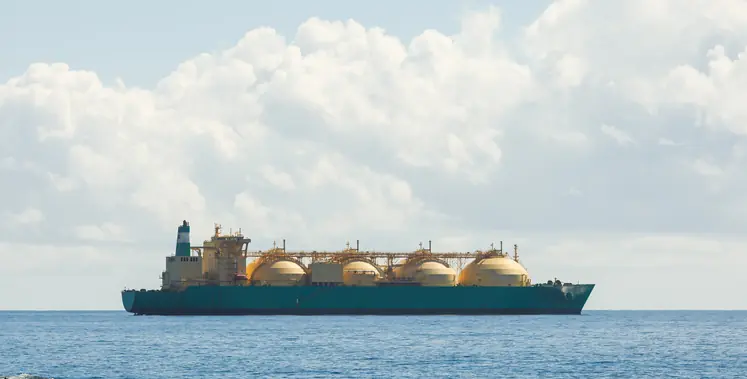
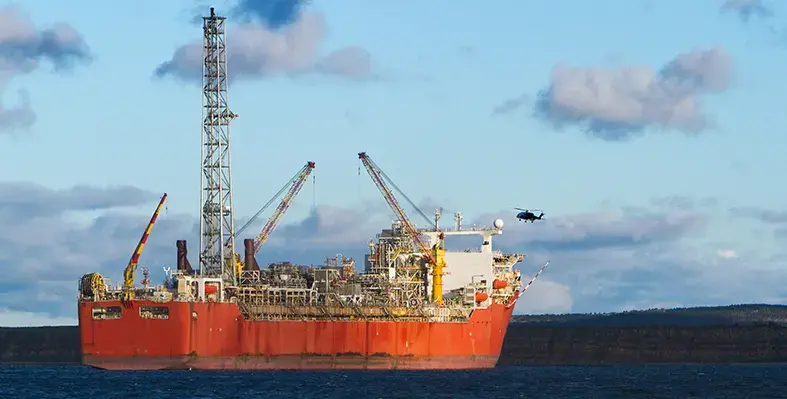
One glimmer of light amongst the doom and gloom, however, has been floating liquefied natural gas (FLNG), where interest has never been higher. Shell’s award to the Samsung/Technip joint venture in the summer of 2009 indicates that participants throughout the value chain, from technology providers to major upstream players, are now prepared to commit to investment in this sector. This recent surge of interest in FLNG and the future of this growing industry are the subjects of a new publication, The World FLNG Market Report 2010-2016, published by energy industry analysts Douglas-Westwood,
However, FLNG liquefaction is not a new idea. The concept has existed since the 1950s when an LNG plant was installed on a river barge in Louisiana. Since the 1970s conceptual studies have taken place to try and utilise this technology in offshore situations but these studies did not see further development. Moving liquefaction technology offshore presents a number of design challenges compared to conventional hydrocarbon production and transportation, approaches that were favoured by energy companies in the past.


Conceptual studies


However, in recent years, the rising global demand for gas has caused many energy companies to refocus their attention on the development of their gas reserves. Long-term global gas demand fundamentals remain strong despite the global recession and the Asian consumer base is expected to recover to its 2008 import levels by 2011. From that period onwards, the LNG industry is likely to move from a supply surplus to a deficit. This is because major onshore liquefaction projects have been delayed in recent years and continue to see delays in final sanctioning.
Vast gas reserves are located far from any existing infrastructure such as pipelines and gas processing facilities and therefore the construction of onshore LNG terminals is often unfeasible. The Timor Sea Joint Petroleum Development Area, is an excellent example of this, as subsea pipelines to the nearest shore (in this case Timor-Leste) would have to cross the Timor Trench, which reaches a depth of 3,300m at its deepest point. FLNG has been seen as a potential solution to this problem and many fields in this area – such as Prelude and Greater Sunrise – have been identified as possible FLNG vessel locations.
Solution to problem of associated gas?
FLNG liquefaction has also been seen as a potential solution to the problem of associated gas – gas that is produced during oil exploration and production. In areas where there is little infrastructure for the gas it has traditionally been re-injected or flared, which is extremely wasteful as well as damaging to the environment. Mid-size FLNG vessels (1-2 mmtpa) are seen as a viable way to allow utilisation of these smaller quantities of gas.
Despite its potential benefits, as mentioned previously, moving liquefaction technology offshore creates design challenges, particularly regarding the reduction in size or ‘footprint’ of the necessary liquefaction or regasification process equipment in order that it can be accommodated on a vessel. Other challenges include the use of specific containment and offloading systems.
For example, sloshing, which occurs when the movement of the ship causes a violent liquid motion in the tanks, is a major problem in the storage of liquefied gas – and is heightened when the vessel is partially full. Membrane-type containment systems, which are found on over half of the current LNG carrier fleet, are particularly vulnerable to sloshing damage and therefore are mostly unsuitable for situations where the vessels spend a large amount of time partially loaded, such as FLNG liquefaction terminals.
The Kvaerner-Moss Spherical containment system is also relatively unsuitable for FLNG liquefaction applications as it limits deck space, which is needed for the all-important topsides.
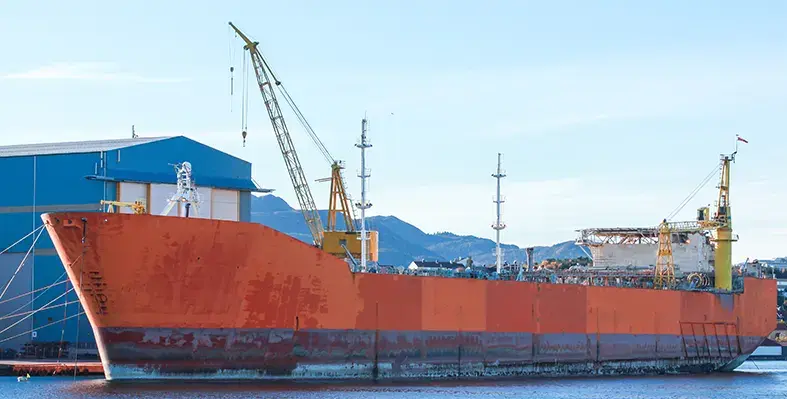
Potential FLNG liquefaction vessel designers are increasingly moving away from the existing systems mentioned above to either IHI’s prismatic SPB, which is currently operational on two LNG carriers, or to new prismatic containment systems that are designed specifically for FLNG applications, systems such as Aker’s Aluminium Double Barrel Tank (ADBT) and Sevan Marine’s LNG FPSO containment system. These systems are sloshing resistant and offer a flat deck space. The majority of FLNG vessel designs revolve around new builds. However, the world’s first LNG carrier to LNG FPSO conversion is likely to be the Arctic Spirit – one of the two existing carriers with a prismatic containment system.
Both membrane and spherical-type containment systems have been successfully used on FLNG regasfication vessels. These vessels are often located in sheltered ports such as Bahia Blanca in Argentina, Pecém and Guanabara Bay in Brazil and Teesside in the UK where weather and ocean conditions are less severe than the open sea. The deck space required for regasification equipment is also much lower than for liquefaction, which allows FLNG regasification developers such as Golar LNG to convert their spherical-type LNG carriers to floating, storage, regasification units (FSRUs).


Ship-to-ship transfer


As for offloading systems, ship-to-ship transfer is currently one of the least proven technologies in the LNG Industry and therefore is the focus of much research, design and testing. Most of the operational floating regasification terminals use loading arms, similar to those that have been used at onshore terminals for more than 40 years. This technology is proposed for Flex LNG’s LNG Producer vessels. Flex has an EPC contract agreed with Samsung Heavy Industries for four of these vessels. Side-by-side offloading, which is likely to be the most common use of loading arms in offshore situations, has its problems. Sea states of more than approximately 2.5m significant wave height are likely to make side-by-side offloading impossible. In areas where such sea states prevail a different solution is required.
An alternative offloading system is a cryogenic hose. This is designed to be used in situations where hostile sea conditions make it difficult to use loading arms. The first transfer of LNG between two vessels using cryogenic hoses took place at the UK’s Teesside GasPort in 2007. Since then this emerging technology has been the focus of much research and development.
FLNG liquefaction technology may still be a challenge, but FLNG regasfication is already a proven technology, with five operational terminals in Brazil, the UK and the USA, and is fast becoming the solution of choice for countries that want fast-track or temporary import solutions. While onshore terminals still retain their comparative advantage when larger import capacities and storage are required, FLNG’s advantages lie in its quick lead times and flexibility. Focus areas for FLNG regasification terminal development include Western Europe and the Mediterranean rim, parts of the Middle East and Latin America. The cost and construction time advantages are proving alluring even in countries such as India and China, which have traditionally favoured onshore development solutions. Indonesia, with its stranded gas fields and rapidly growing cities, is a focus for both floating liquefaction and regasification terminals.
In the past, the USA has been seen as a major driver of FLNG activity. The country has two FLNG regasification terminals in operation: in the Gulf of Mexico and offshore Boston, Massachusetts. However, many promising offshore projects in the USA have been delayed, due to a number of factors including the strict regulatory system, not-in-my-back-yard attitudes, and environmental concerns regarding the open-loop system and its effects on marine habitats. The unprecedented increase in domestic unconventional gas reserves such as shale gas, seen recently, has also caused some developers to rethink their plans for importing LNG into the USA. Ultimately the USA is still likely to require significant LNG imports to meet demand post 2015. In the meantime, import levels are likely to be determined by the balance of the cost of shale gas production (which is comparatively expensive) against spot prices for LNG cargos.
Douglas Westwood Limited forecasts $23 billion to be spent on FLNG facilities over the 2010 to 2016 period. Despite a large number of FLNG regasification projects, the vast majority of this capital expenditure will be spent on liquefaction terminals as capex associated with a floating liquefaction terminal is more than triple that of a typical floating import terminal.
The capex forecast is the output of a market model built on a project-by-project review of development prospects, with the timing of expenditure phased to reflect likely project structure. This model has been developed in consultation with industry experts and also sense-checked to account for external factors such as supply chain constraints. The forecasts are segmented by services such as technology licensing, front end engineering and design, project management and detailed design engineering, construction engineering (field engineering), construction and installation (hook-up and commissioning).
Australasia and Africa, due to their FLNG liquefaction projects, account for the biggest proportion of forecast capex. North America, despite having the largest number of import terminal prospects is only expected to account for $1.6bn or 7 per cent of the total capex between 2010 and 2016.
In conclusion, then, it is clear that, within the last year, interest in FLNG (both liquefaction and regasification) has grown substantially. This is a trend that is likely to continue over the next seven years. Commitment from majors such as Shell in the groundbreaking floating liquefaction sector serves as an indicator of the confidence in the future of the FLNG industry.
Australasia and Africa remains the focus of FLNG liquefaction projects, largely due to the number of stranded gas fields in region as well as concerns over gas flaring. FLNG regasification projects are focused on countries which experience or are expecting to experience seasonal demand spikes and therefore need fast-track projects in order to meet this increased demand.

*The World FLNG Market Report 2010-2016 costs £3,250. Further information can be found at www.dw-1.com. Douglas-Westwood is an independent employee-owned company and the leading provider of business research & analysis, strategy and commercial due diligence on the global energy services sectors.

**Lucy Miller is an analyst with DWL and has conducted market analysis on a variety of DWL’s commissioned research projects for clients in the oil and gas sector. Ian Jones is an analyst with DWL, contributing to the firm’s commissioned research, commercial due diligence and published market studies in the oil and gas and renewable energy sectors.
Top Stories

Grid List

The agreement will considerably push Nigeria's deepwater development.

Exploration

As Oil Prospecting Licence 245 (OPL 245) undergoes conversion, the President of the Federal Republic of Nigeria, Bola Ahmed Tinubu, and Eni's chief executive officer, Claudio Descalzi, met in Abuja to explore how the development can advance the Nigerian deepwater sectors

A significant feature of the agreement is the discontinuation of the international arbitration proceeding at the International Centre for Settlement of Investment Disputes (ICSID), thus allowing the conversion of the existing license into two development licences, Petroleum Mining Leases (PML) 102 and 103, and two exploration licences, Petroleum Prospecting Leases (PPL) 2011 and 2012, to Nigerian Agip Exploration Limited (NAE) as operator, alongside its partners Nigerian National Petroleum Company Limited (NNPC) and Shell Nigeria Exploration and Production Company Limited (SNEPCO). 

The agreement will considerably push Nigeria's deepwater development with Eni set to apply its know-how on the Zabazaba and Etan fields for optimal output. An extensive programme has been devised to generate approximately 500 MMbbl of reserves from the fields, including the deployment of a 150 kbopd capacity FPSO processing facility, while gas (200 MMSCFD at peak) will be exported through Nigeria LNG. The highly potential PPL 2011 and PPL 2012 exploration licenses will also be developed in line with the Zabazaba and Etan fields for a well-synced operational and production output from all facilities involved.

President Tinubu and Mr Descalzi also discussed Eni’s significant investment portfolio — including the Abo and Bonga fields and Nigeria LNG — as well as on potential new developments designed to expand the country’s offshore production capacity. Within this framework, and in line with its long-term strategy in the country, Eni has recently expanded its interests in deep-water developments, with the acquisition of an additional stake in OML 118, now holding 15%.


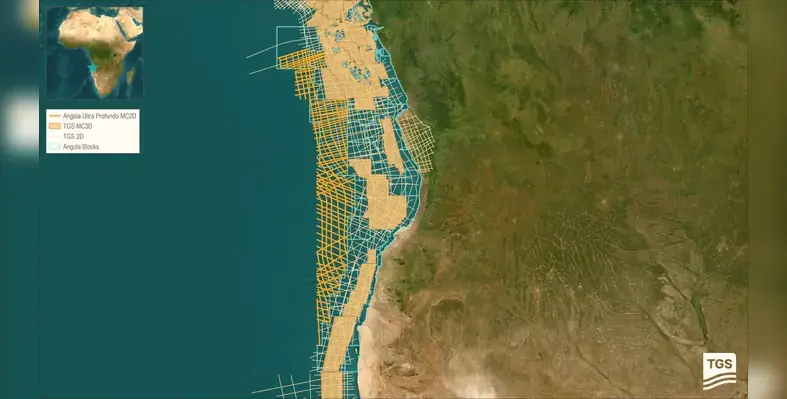
The survey spans approximately 12,600 line kilometers. (Image source: TGS)

Geology & Geophysics

Energy data and intelligence provider, TGS, has announced the Ultra Profundo multi-client 2D survey offshore Angola

The survey spans approximately 12,600 line kilometers, and Ramform Victory began operations earlier in Q1. Data acquisition is likely to be completed in around 100 days, with fast-track products available in Q3. Full data processing is scheduled for completion in Q2 2027.

The Ultra Profundo multi-client 2D survey marks the first 2D multi-client acquisition over Angola’s ultra deep-water areas since 2015 and aims to reach previously underexplored region. The survey delivers modern, long-offset seismic data critical for imaging complex pre-salt and top-salt structures as well as basin floor channel systems, significantly enhancing regional geological understanding.

Kristian Johansen, CEO of TGS, said, “Angola’s ultra deep-water margin represents one of the most exciting frontier exploration opportunities in West Africa. Our Ultra Profundo multi-client 2D program delivers high-quality seismic coverage needed to unlock pre-salt and sub-salt potential. By leveraging TGS’ acquisition and imaging capabilities, we will provide high-quality data supporting future exploration activities.”

TEN field's total production count for 2025 is 16.0 kbopd.

Technology

With all reservoir and operations risks for 2026 considered, Tullow Oil is aiming an average production rate of 34-42 kboepd, including 6 kboepd of gas 

In 2025, Ntomme and Enyenra performance from TEN led the field's total production count at 16.0 kbopd, while the exit rate from Jubilee stood at 57 kbopd. 

The company will be deploying riser system and riser-base gas lift for well production management activities, and waterflood and fluid lift optimisation. These, along with the support of high-uptime FPSO, five planned Jubilee wells (four producers and one water injector) are expected onstream this year. The J75-P, for instance -- where a rig has been active for drilling -- has recorded three good reservoir intervals. 

The recently completed J74-P well is already onstream since January, revealing 50 meters of net pay while generating an initial gross production through the wellbore at 13 kbopd. 

The well management measures align with findings from 4D seismic and Ocean Bottom Node seismic surveys to leverage significant reservoir information extracted. 

Tullow has made a strategic investment to acquire the TEN FPSO as it will simplify operational synergies between the TEN and Jubilee fields, maximising output in the long term with minimal expenses. The company has already secured 10-year and 14-year-long ratifications on the West Cape Three Points and Deep Water Tano Petroleum Agreements.

Ian Perks, chief executive officer, Tullow Oil Plc, said, “2025 has been a year of disciplined execution across the business. This includes strong operational momentum which continues with excellent results from the latest Jubilee well and a further five wells due onstream this year to support our production targets. We have achieved significant cost reductions and completed the sale of non-core assets in our ongoing efforts to streamline our portfolio and strengthen our financial position.

“However our 2025 full year free cashflow was negatively impacted by the commodity price environment towards the end of the year and delays in receipt of Government of Ghana receivables and the second instalment of proceeds from the Kenya disposal.

“The refinancing transaction we have announced today enables us to focus on delivering our near-term priorities, which include driving further cost efficiencies, improving cashflow management and optimising our production."


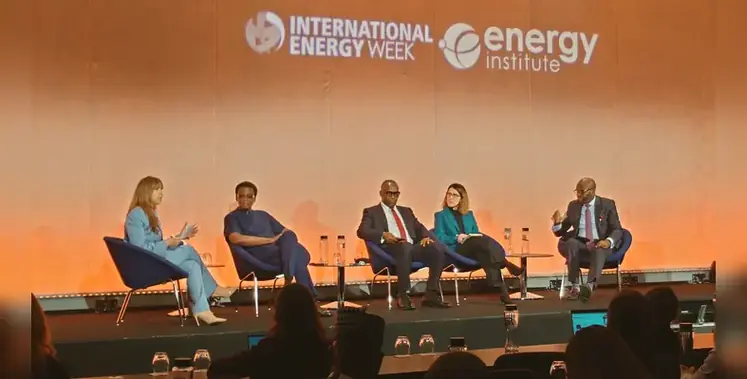
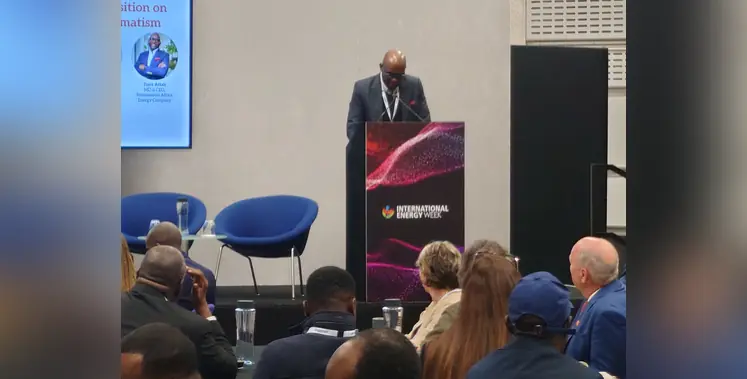
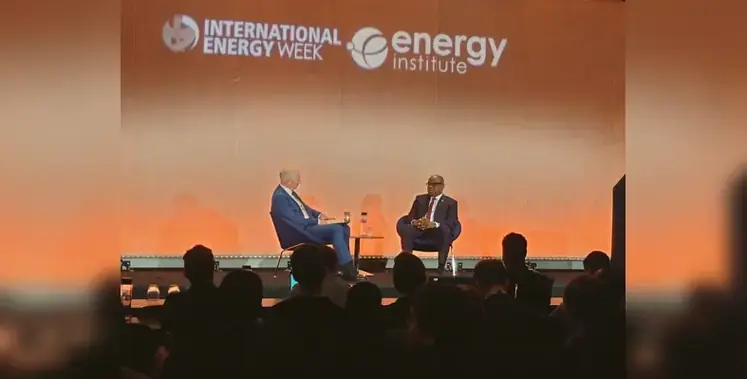
The panel's theme was 'Africa's energy transition on African terms'.

Gas

Crystol Energy's founder and chief executive officer, Dr. Carole Nakhle, moderated an Africa-focused panel during the recently concluded International Energy Week in London to get a perspective on the continent's stand on decarbonisation and energy transition practices

"It's not saying that decarbonisation should be ignored, but the truth is, you can't decarbonise what you don't have. If you don't have energy, you can't be talking about decarbonisation. You have to have the energy faster than you decarbonise," said the Nigerian National Petroleum Company's chief financial officer, Adedapo Segun, in the context of poor energy access in Africa

Segun's case was further supported by Renaissance Africa Energy Company's managing director and chief executive officer, Tony Attah, who said that with a teeming youth population, Africa cannot compromise on industrialisation. "I think it's a no brainer that from an African lens, from a Nigerian lens, industrialisation is what will move people out of poverty. We want to be given the flexibility to use the same resources to achieve what Europe and the rest of the world has achieved. From an African lens, it's survival first. I haven't survived. You're asking me to make a choice. It's about the industrialisation of Africa...when you talk about the whole emissions and impact on climate, data suggests that the entire Africa is contributing way less than 4% so essentially, we can even carry on at two, three times the scale today, and it will not be of any significant impact," Attah said.

While Dr. Nakhle was all ears, she stressed Africa's responsibility to eliminate flaring for sustainable production. "Just by increasing the penalty on gas flaring, you motivate the companies to actually still produce oil and gas with lower carbon intensity, because I think that would be the winning step for the future, and not to continue with what was a good old fashioned way of producing oil and gas."

According to Attah, flaring has been a focus area for most creditors as part of decarbonisation strategy, which aligns with attaining zero routine flare by 2030. With engineers working on projects to deal with gas storm compression infrastructure that are capable of moving gas from flood centres to the market, there has been a massive reduction in flare now. 

Gas is already driving Africa's energy narrative, with around 620 trillion standard cubic feet coming solely from Algeria, Mozambique and Nigeria. The world has come to Africa with massive investments, not just for international market but also the domestic market. The nation is hence way past the stage of "making a case", as now its just a matter of the investments unleashing the potential that is trapped in all these countries.

"Gas is going to be the game changer for us. So we are looking to develop our gas resources and export the gas to derive the financing for developing the country, and bridging the infrastructure gap," said AGPC's managing director, Effiong Okon, as he gave some perspective on Nigeria's national budget against the infrastructure budget of European countries.

"We have a budget of just about 20 something million dollars. That is for the whole country, and 45% of that goes to debt service. Another 15% goes to security. So you have 60% of the budget locked in debt service and security. And with that, you really cannot build infrastructure. You need to improve the standard of living. It becomes impossible. I checked on some of the European countries, Germany, for example, for just for infrastructure in 2026 [it is] going to spend close to US$200bn. So we really need to find the prosperity to develop," he said. 

Dr. Nakhle also raised the question of Africa's biggest paradox. "Africa is rich in energy resources, and yet it is poor when it comes to energy consumption. What do you think needs to change to change this reality on the ground?" she asked.

Attah's answer was that Africa is looking at a typically extractive industry when it comes to oil and gas. While the resource belongs to the nation, it was entirely under the control of international oil companies. Due to this structural dislocation, IOCs will extract, go and develop their respective countries with it. But now with majors announcing massive divestments on the back of onshore maturation, companies like Renaissance were feeling the heat. "But I have to thank NNPC for just supporting the divestment to go through. So we bought the share assets, and you can imagine that our philosophy and vision will be different from that of an IOC. We have a very audacious vision to be the African leader in energy. The IOC will not want to be the African leader in energy. They want to be the global leaders, but we want to be the African leader in energy. We want to enable energy security, [and] we want to bring about the industrialisation of Nigeria. Now that was not an assignment for the IOC...We are now taking our destinies in our hands to the extent that we will have no choice than to ensure that that shared prosperity from this energy resource base changes the narrative. On behalf of Nigerians, starting from Nigeria, pivoting to rest of Africa, which is why we like to say as Renaissance, we were made in Nigeria, built for Africa," he said. 

On the energy transition front, Silvia Macri, Middle East and Africa lead, Power & Renewables, S&P Global, said, "If you think about diversification, some countries in western Africa, Kenya in eastern Africa, are pushing either away from a fossil fuel heavy energy mix, or diversifying the sources, instead of having one major source of the produces, power or energy for the country; just choosing all the different options that are available. And this is something that South Africa, for example, has started doing at a faster pace. Kenya is probably the country where this has happened at the highest level, because it has a huge availability of geothermal resources, which allowed the diversification into renewables, but western African countries are bringing gas generation in the mix together with renewables...going forward, [it is important that] the decisions that they're making are more for the longer term, and they're not just solving the problem that is immediate."


Vitol Bahrain EC has a long-standing presence in Uganda's downstream sector.

Downstream

As the Uganda National Oil Company aims to build a crude refinery, it has reached out to a unit of global commodities trader, Vitol, for a US$2bn loan to support the project alongside construction and infrastructure developments

According to Henry Musasizi, Uganda's junior finance minister, this seven-year tenor loan from Vitol Bahrain EC (VBA) comes with an interest rate of 4.92%. The minister worked on advancing the approval process for the credit line and the loan, which involved significant lawmakers, who sanctioned the development with a majority verdict.

Musasizi said that Vitol's support "presents an opportunity to access non-traditional financing to implement. ..projects and support the government in developing national infrastructure."  

Vitol Bahrain EC has a long-standing presence in Uganda's downstream sector, functioning as the sole supplier of refined petroleum products to UNOC, before the state-owned company sells it to retailers across the country.

Alongside the refinery, the loan amount will also be covering road construction, a petroleum products storage terminal and extension of a petroleum pipeline from western Kenya to Uganda's capital Kampala.

Previously, the UNOC also concluded a deal with the UAE-based Alpha MBM Investments, whereby a domestic refinery with a capacity of 60,000 barrels per day is in the pipeline. The agreement accords 60% stake on the refinery to the UAE firm while UNOC retains 40%.

Uganda is looking to begin commercial oil generation starting next year from fields in its west.

Christopher Hudson, President of dmg events. (Image source: dmg events)

Event News

Oil Review Africa catches up with Christopher Hudson, President of dmg events, ahead of ADIPEC 2025

Excerpts from an interview: 

Energy across Africa, as elsewhere in the world, is seeing major shifts and advancements. How does ADIPEC 2025 reflect this changing industry landscape and help meet the needs? 

Energy is one of the most dynamic and rapidly evolving sectors. According to the International Energy Agency (IEA), global energy demand rose by 2.2% last year, outpacing the average annual increase of 1.3% recorded over the last decade. At the same time, the global population is projected to reach 9.8 billion by 2050, with over 750 million people still lacking access to electricity, and more than 2.1 billion people remain without access to clean cooking. Rising urbanisation and living standards are reshaping energy demand, with air conditioning alone expected to be one of the largest contributors to electricity demand growth in the coming decades. This reveals the sector’s increasing need to not only produce more energy but to produce it in a way that is equitable and sustainable.
In this context, ADIPEC 2025 is being held under the theme of ‘Energy. Intelligence. Impact’. It reflects a simple but powerful truth: meeting the world’s growing need for secure, affordable and sustainable energy will depend on how intelligently we harness every resource – human, technological and natural – to deliver meaningful results for economies and communities alike.

At its core, the theme recognises that intelligence – both human and artificial – is transforming the way energy is produced, managed, and consumed. From AI-driven optimisation and digital integration to advances in hydrogen, LNG, and decarbonisation, intelligent innovation is reshaping the global energy landscape. ADIPEC serves as the meeting point for these forces, where ideas translate into action and impact can be measured in investment, policy, and progress.

AI is a major topic of discussion in the context of energy, due to its high demand. How is ADIPEC responding to the challenges and opportunities of the AI-energy nexus? 

Artificial intelligence is reshaping both global energy demand and the industry’s ability to respond. Data centres already consume around 1.5% of global electricity, and with AI workloads, that demand could more than double by 2030, rising from 415 TWh to 945 TWh. A single advanced AI model can require as much electricity to train as 100 households use in a year, while an AI query may consume 10 times more energy than a standard search.

This convergence is both a challenge and an opportunity. AI requires enormous energy, but it can also optimise grids, cut waste, improve operational efficiency, and accelerate decarbonisation. At ADIPEC 2025, we have expanded our AI Zone into five experiential areas showcasing how AI is transforming systems, people, and infrastructure. Alongside this, more than 80 conference sessions are dedicated to the AI–energy nexus, from predictive analytics to governance frameworks.

For Africa, this is particularly significant. Many countries are rapidly digitalising while also expanding power systems. The ability of AI to enhance reliability and reduce costs could be transformative for energy access and economic growth.

How is the diversity of the African continent and its vast energy sector reflected across ADIPEC 2025’s programme? 

Africa is a core part of ADIPEC’s community. This year, we are proud to welcome a strong delegation of African ministers and leaders, including those from Nigeria, Kenya, Uganda, Sierra Leone, Zimbabwe, Gambia, Equatorial Guinea, and Egypt. Their participation enriches ADIPEC’s Strategic Conference and exhibitions, ensuring Africa’s perspectives are reflected in discussions on natural gas, hydrogen, downstream, and low-carbon solutions.

dmg events is also the largest organiser of energy and infrastructure events across Africa, with long-standing operations in Nigeria, Mozambique, Kenya, Ethiopia, Ghana, Tanzania, South Africa, Egypt and Morocco. This presence gives us a unique vantage point to bridge African priorities with global dialogue.

Africa holds some of the world’s largest reserves of natural gas, oil, and minerals, as well as enormous potential in renewables. ADIPEC is committed to supporting this potential by convening African voices alongside global leaders, unlocking partnerships that can expand access, accelerate industrialisation, and strengthen Africa’s contribution to global energy progress.

Some of ADIPEC 2025’s notable African speakers include: Honourable J. Opiyo Wandayi, Cabinet Secretary for Energy and Petroleum, Kenya; Honourable Sen. Dr. Heineken Lokpobiri, Minister for State (Oil), Petroleum Resources, Nigeria; Rt. Honourable Ekperikpe Ekpo, Minister for State (Gas) Petroleum Resources, Nigeria; Honourable Chief Adebayo Adelabu, Minister of Power, Nigeria; Honourable Julius D. Mattai, Minister of Mines and Mineral Resources, Republic of Sierra Leone; Honourable Ruth Nankabirwa Ssentamu, Minister of Energy and Mineral Development, Uganda; His Excellency Karim Badawi, Minister of Petroleum and Mineral Resources, Arab Republic of Egypt; His Excellency Antonio Oburu Ondo, Minister of Mines and Hydrocarbons, Equatorial Guinea, Honorable Julius D. Mattai, Minister of Mines and Mineral Resources, Republic of Sierra Leonne; Honourable July Moyo, Minister of Energy and Power Development, Zimbabwe; His Excellency Nani Juwara, Minister of Petroleum and Energy, Gambia; Honourable Cheikh Niane, Deputy Minister of Petroleum and Energy, Senegal, and Mathias Katamba, board chairman, Uganda National Oil Company.