







vb

twitter Facebook linkedin acp


Algeria is upbeat about the potential both of its unconventional gas reserves and of solar power in boosting local and exported power supply. However, it is still unclear, as Samuel Ciszuk of IHS tells Vaughan O’Grady, whether that potential will become a reality

p> 

Algeria is upbeat about the potential both of its unconventional gas reserves and of solar power in boosting local and exported power supply. However, it is still unclear, as Samuel Ciszuk of IHS tells Vaughan O’Grady, whether that potential will become a reality

It's an ambitious aim: a 50 per cent LNG production capacity increase by 2012 and a US$60bn renewable energy programme by 2030. On the other hand, Algeria does have a few advantages.

Firstly it is not only a major oil producer but has a well-established and sizeable gas production industry. In fact official estimates indicate that there is more gas available, albeit much of it is likely to come from tight and shale gas. While actual figures are not yet available, exploration drilling until the end of 2014 could double to between 500 and 600 wells, and energy minister Youcef Yousfi has made it clear that he feels the quantities of gas involved could be vast.

The basic resources on the solar energy side do not even need to be proved: this is a very sun-rich country. Estimates that up to 200,000 jobs, as well as a new source of export earnings, could result are a major incentive to develop a renewable power industry. Nor, given the amount of sunlight available is this a fanciful notion — if, that is, enough research, expertise, technology, manufacturing resources and investment can be harnessed to develop a solar power industry in Algeria.

Up to the job?

But it’s a big if — and not just in the case of solar. Both renewables and the exploitation of unconventional gas resources are tricky areas to monetise, given such questions as whether the technology available is up to the job and whether the business models stand up.

Especially problematic in the latter context is Algeria’s apparent rejection, since the middle of the last decade, of liberalisation of the energy sector in favour of a more resourcenationalistic approach. It’s an approach that has made fiscal terms so tight that many would-be investors have been put off.

Nor is that situation likely to change.

Samuel Ciszuk, senior Middle East energy analyst with IHS* explains, “Right now, speaking up for liberalisation — improving terms in order to attract investment — comes at a political cost.”

But speaking up may eventually be necessary when many existing oil and gas fields are approaching maturity and new sources of gas in particular are needed. And there’s another problem: spiralling domestic power demand and the need for more and more gas to meet it. That, as Ciszuk notes, is where Algeria, like so many other countries, has brought problems on itself. “The general problem is the same as in the rest of the Middle East: subsidy-driven demand growth,” he says. And given recent regional unrest, cutting subsidies and trying to rein in demand is unlikely to be an option.

New gas sources needed

So new sources of gas are needed for the long term. The gas reserves being targeted are likely to be found in the south-central and south-western Sahara desert areas, where significant discoveries have already been made and there seems to be a high potential for more. But Algeria has already failed to unlock development, much of it of unconventional gas, in those areas. It's hardly surprising.

Getting at tight and shale gas is an expensive undertaking technically, and if they are a long way from centres of population, there are additional logistical demands, as equipment may need to be flown out to very isolated areas. This does not bode well for future largescale production of unconventional gas.

To make matters worse, Algeria’s ability to meet existing gas export commitments, even from gas-rich areas, does not inspire confidence. Ciszuk explains, “A lot more export capacity is coming on stream — but it is not being matched by upstream capacity, especially if we look towards 2013 and 2014 because so many of the projects that were supposed to have come on stream by that time are running very big delays.”

LNG capacity hold-ups after the explosion and fire in Skikda in 2004 (where new capacity has just come onstream) were obviously to be expected, but other projects have simply not happened on time or were delayed by the 2010 corruption scandal at state NOC Sonatrach and the Energy Ministry, which led to the departure of just about anybody who might be able to make a decision.

At the same time the running of existing export facilities over the past few years has not been at the production levels one might have hoped for. Ciszuk says, “That might have something to do with feedstock problems and transport problems, because they've saved money on their maintenance for years. The mid-stream infrastructure especially is said by some people to be a in a rather precarious state in many cases.”

Even if all these problems are overcome, gas market prices need to be high enough to compensate for the expense of tight or shale gas exploration and production. However, present indications are that they could be relatively low for some time, given the participation in the market as major players, now or in the future, of Qatar, Australia, the US, Nigeria and others. Official Algerian comment about future pricing and demand has been quite optimistic, but the reality, says Ciszuk, is, “We don't know; it's impossible to say."

It is also hard to say whether the market value of solar power will be worth the price of providing it. Non-Algerian renewable energy companies will presumably be encouraged to share their technologies. However, there may be little financial incentive for them to do so and the companies will probably have little influence over how their technologies are employed or monetised. At the very least, recent pronouncements indicate that the Algerian government would like a strong local component in manufacturing and research. Significant lack of project control could deter foreign partners from getting involved (or persuade them to focus on more businessfriendly countries like Morocco), adding to long-term costs.

But even if Algeria were an open, attractive investment environment for solar energy development, is solar at the moment a profitable business?

Sahara to the coast

To start with, there is the problem of the distance from the heart of the Sahara desert up to the Algerian coast. As Ciszuk says, “We might be talking about power transmissio over well over 1500 kilometres depending on where they start building these facilities.

Maybe they'll try to build them a bit closer of course but you still have transport losses of electricity.” It’s true, he adds, that new technologies can create and move renewable power much more efficiently than before, making the idea of potentially exporting power from Africa to Europe at least conceivable, but it is by no means a proven system. In any case, Algeria is a long way from making that happen. “They've struggled so far to be a good investment destination for other companies than upstream; they've even struggled with upstream companies,” says Ciszuk. “So to be a new Silicone Valley for the renewable industries is very ambitious.”

But even if the price the market is willing to pay per unit of solar energy can justify the effort, don’t forget too that these calculations need also to make room for domestic power supply, which is likely to be a drain on export earnings for solar as well as gas.

A lack of investment and relevant expertise, not to mention bureaucracy, affect many industries in Algeria and are especially notable in the oil and gas sector, not least in the case of Sonatrach, whose participation in all projects is mandatory. Ciszuk points out that Sonatrach is far from inept, and that it has worked hard in important areas like technology transfer, but in the case of unconventional gas sources, he says, it will need help. “It’s problematic for them to do it themselves, from a financing point of view from a technology point of view and from a cadre point of view – and especially,” he adds, “if they want to move towards shale gas, because they don’t know anything about that.”

Outside involvement needed

Which means outside involvement. But interest from IOCs in new upstream acreage has been falling in successive licensing rounds and, the most recent round — the ninth — has resulted in only two exploration licence areas out of ten on offer being awarded. But the international interest was even lower than this figure may make it seem: one of the two awarded areas was taken by Sonatrach.

Commenting on the very weak response to the ninth licensing round in a recent research note, IHS says: “IOCs increasingly have found

Algerian fiscal terms too tight and its politically driven strong resource-nationalism sentiments unhelpful, in an environment already massively characterised by high levels of red tape and slow-moving bureaucracy”.

Remember that these rounds do not involve the country’s unconventional gas reserves, which will require even more technically complex and demanding exploration and development. The Algerian renewables sector, meanwhile, has barely got off the ground. In both cases, however, there is no obvious sign of the government relaxing its fiscal terms of easing the regulatory environment.

So would-be investors will have to hope for a change of heart. Or, as Ciszuk puts it, “Given that companies are struggling to move forward under the very tough Algerian terms with far less complex projects, the question is 'What terms will the Algerians offer?'” 

*IHS is a leading source of information and insight in energy, economics, geopolitical risk, sustainability and supply chain management. www.ihs.com
Top Stories

Grid List

The agreement will considerably push Nigeria's deepwater development.

Exploration

As Oil Prospecting Licence 245 (OPL 245) undergoes conversion, the President of the Federal Republic of Nigeria, Bola Ahmed Tinubu, and Eni's chief executive officer, Claudio Descalzi, met in Abuja to explore how the development can advance the Nigerian deepwater sectors

A significant feature of the agreement is the discontinuation of the international arbitration proceeding at the International Centre for Settlement of Investment Disputes (ICSID), thus allowing the conversion of the existing license into two development licences, Petroleum Mining Leases (PML) 102 and 103, and two exploration licences, Petroleum Prospecting Leases (PPL) 2011 and 2012, to Nigerian Agip Exploration Limited (NAE) as operator, alongside its partners Nigerian National Petroleum Company Limited (NNPC) and Shell Nigeria Exploration and Production Company Limited (SNEPCO). 

The agreement will considerably push Nigeria's deepwater development with Eni set to apply its know-how on the Zabazaba and Etan fields for optimal output. An extensive programme has been devised to generate approximately 500 MMbbl of reserves from the fields, including the deployment of a 150 kbopd capacity FPSO processing facility, while gas (200 MMSCFD at peak) will be exported through Nigeria LNG. The highly potential PPL 2011 and PPL 2012 exploration licenses will also be developed in line with the Zabazaba and Etan fields for a well-synced operational and production output from all facilities involved.
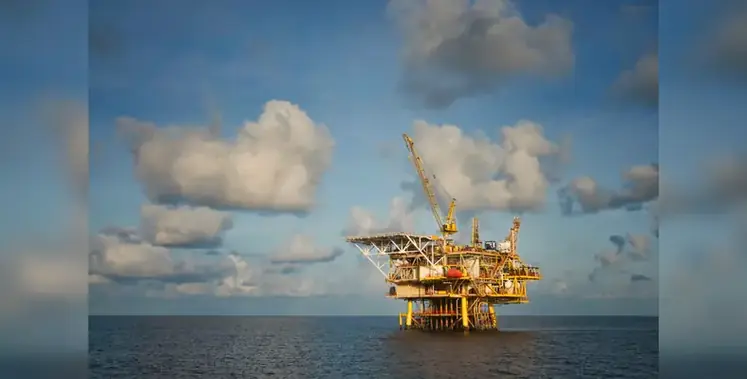
President Tinubu and Mr Descalzi also discussed Eni’s significant investment portfolio — including the Abo and Bonga fields and Nigeria LNG — as well as on potential new developments designed to expand the country’s offshore production capacity. Within this framework, and in line with its long-term strategy in the country, Eni has recently expanded its interests in deep-water developments, with the acquisition of an additional stake in OML 118, now holding 15%.


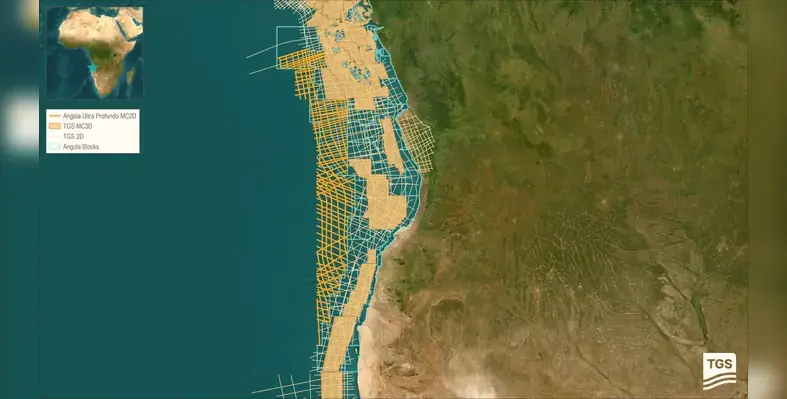
The survey spans approximately 12,600 line kilometers. (Image source: TGS)

Geology & Geophysics

Energy data and intelligence provider, TGS, has announced the Ultra Profundo multi-client 2D survey offshore Angola

The survey spans approximately 12,600 line kilometers, and Ramform Victory began operations earlier in Q1. Data acquisition is likely to be completed in around 100 days, with fast-track products available in Q3. Full data processing is scheduled for completion in Q2 2027.

The Ultra Profundo multi-client 2D survey marks the first 2D multi-client acquisition over Angola’s ultra deep-water areas since 2015 and aims to reach previously underexplored region. The survey delivers modern, long-offset seismic data critical for imaging complex pre-salt and top-salt structures as well as basin floor channel systems, significantly enhancing regional geological understanding.

Kristian Johansen, CEO of TGS, said, “Angola’s ultra deep-water margin represents one of the most exciting frontier exploration opportunities in West Africa. Our Ultra Profundo multi-client 2D program delivers high-quality seismic coverage needed to unlock pre-salt and sub-salt potential. By leveraging TGS’ acquisition and imaging capabilities, we will provide high-quality data supporting future exploration activities.”

TEN field's total production count for 2025 is 16.0 kbopd.

Technology

With all reservoir and operations risks for 2026 considered, Tullow Oil is aiming an average production rate of 34-42 kboepd, including 6 kboepd of gas 

In 2025, Ntomme and Enyenra performance from TEN led the field's total production count at 16.0 kbopd, while the exit rate from Jubilee stood at 57 kbopd. 

The company will be deploying riser system and riser-base gas lift for well production management activities, and waterflood and fluid lift optimisation. These, along with the support of high-uptime FPSO, five planned Jubilee wells (four producers and one water injector) are expected onstream this year. The J75-P, for instance -- where a rig has been active for drilling -- has recorded three good reservoir intervals. 

The recently completed J74-P well is already onstream since January, revealing 50 meters of net pay while generating an initial gross production through the wellbore at 13 kbopd. 

The well management measures align with findings from 4D seismic and Ocean Bottom Node seismic surveys to leverage significant reservoir information extracted. 

Tullow has made a strategic investment to acquire the TEN FPSO as it will simplify operational synergies between the TEN and Jubilee fields, maximising output in the long term with minimal expenses. The company has already secured 10-year and 14-year-long ratifications on the West Cape Three Points and Deep Water Tano Petroleum Agreements.

Ian Perks, chief executive officer, Tullow Oil Plc, said, “2025 has been a year of disciplined execution across the business. This includes strong operational momentum which continues with excellent results from the latest Jubilee well and a further five wells due onstream this year to support our production targets. We have achieved significant cost reductions and completed the sale of non-core assets in our ongoing efforts to streamline our portfolio and strengthen our financial position.

“However our 2025 full year free cashflow was negatively impacted by the commodity price environment towards the end of the year and delays in receipt of Government of Ghana receivables and the second instalment of proceeds from the Kenya disposal.

“The refinancing transaction we have announced today enables us to focus on delivering our near-term priorities, which include driving further cost efficiencies, improving cashflow management and optimising our production."


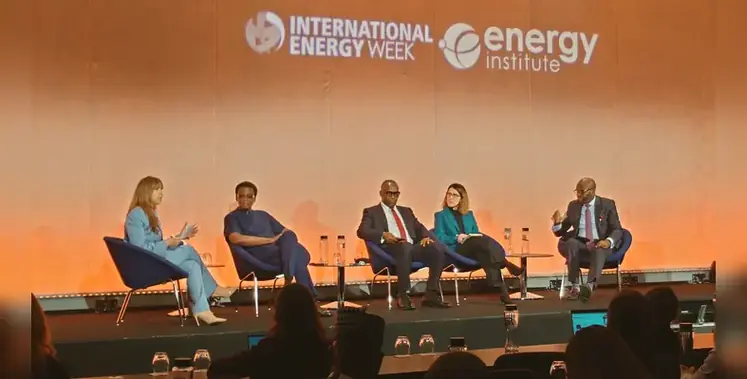
The panel's theme was 'Africa's energy transition on African terms'.

Gas

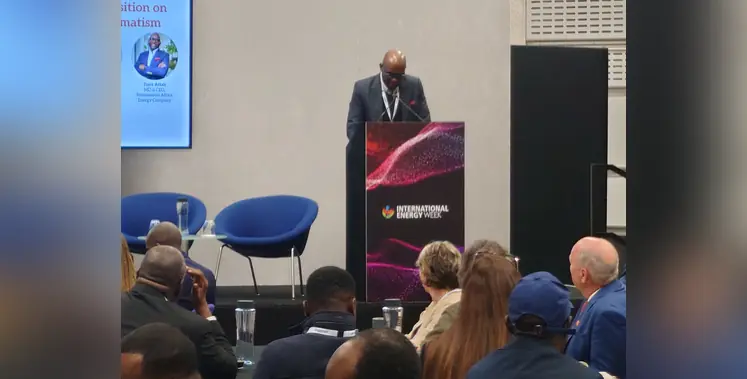
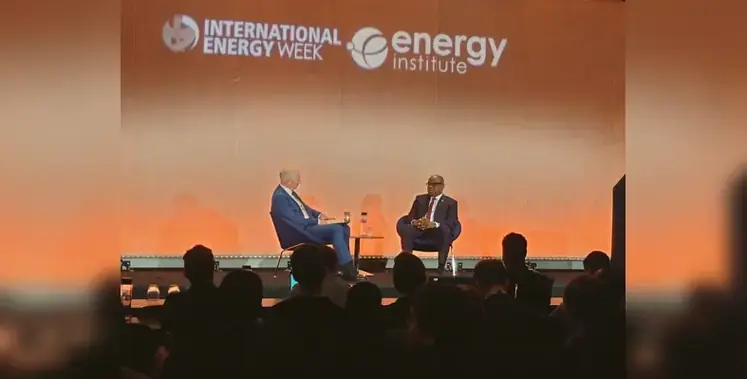
Crystol Energy's founder and chief executive officer, Dr. Carole Nakhle, moderated an Africa-focused panel during the recently concluded International Energy Week in London to get a perspective on the continent's stand on decarbonisation and energy transition practices

"It's not saying that decarbonisation should be ignored, but the truth is, you can't decarbonise what you don't have. If you don't have energy, you can't be talking about decarbonisation. You have to have the energy faster than you decarbonise," said the Nigerian National Petroleum Company's chief financial officer, Adedapo Segun, in the context of poor energy access in Africa

Segun's case was further supported by Renaissance Africa Energy Company's managing director and chief executive officer, Tony Attah, who said that with a teeming youth population, Africa cannot compromise on industrialisation. "I think it's a no brainer that from an African lens, from a Nigerian lens, industrialisation is what will move people out of poverty. We want to be given the flexibility to use the same resources to achieve what Europe and the rest of the world has achieved. From an African lens, it's survival first. I haven't survived. You're asking me to make a choice. It's about the industrialisation of Africa...when you talk about the whole emissions and impact on climate, data suggests that the entire Africa is contributing way less than 4% so essentially, we can even carry on at two, three times the scale today, and it will not be of any significant impact," Attah said.

While Dr. Nakhle was all ears, she stressed Africa's responsibility to eliminate flaring for sustainable production. "Just by increasing the penalty on gas flaring, you motivate the companies to actually still produce oil and gas with lower carbon intensity, because I think that would be the winning step for the future, and not to continue with what was a good old fashioned way of producing oil and gas."

According to Attah, flaring has been a focus area for most creditors as part of decarbonisation strategy, which aligns with attaining zero routine flare by 2030. With engineers working on projects to deal with gas storm compression infrastructure that are capable of moving gas from flood centres to the market, there has been a massive reduction in flare now. 

Gas is already driving Africa's energy narrative, with around 620 trillion standard cubic feet coming solely from Algeria, Mozambique and Nigeria. The world has come to Africa with massive investments, not just for international market but also the domestic market. The nation is hence way past the stage of "making a case", as now its just a matter of the investments unleashing the potential that is trapped in all these countries.

"Gas is going to be the game changer for us. So we are looking to develop our gas resources and export the gas to derive the financing for developing the country, and bridging the infrastructure gap," said AGPC's managing director, Effiong Okon, as he gave some perspective on Nigeria's national budget against the infrastructure budget of European countries.

"We have a budget of just about 20 something million dollars. That is for the whole country, and 45% of that goes to debt service. Another 15% goes to security. So you have 60% of the budget locked in debt service and security. And with that, you really cannot build infrastructure. You need to improve the standard of living. It becomes impossible. I checked on some of the European countries, Germany, for example, for just for infrastructure in 2026 [it is] going to spend close to US$200bn. So we really need to find the prosperity to develop," he said. 

Dr. Nakhle also raised the question of Africa's biggest paradox. "Africa is rich in energy resources, and yet it is poor when it comes to energy consumption. What do you think needs to change to change this reality on the ground?" she asked.

Attah's answer was that Africa is looking at a typically extractive industry when it comes to oil and gas. While the resource belongs to the nation, it was entirely under the control of international oil companies. Due to this structural dislocation, IOCs will extract, go and develop their respective countries with it. But now with majors announcing massive divestments on the back of onshore maturation, companies like Renaissance were feeling the heat. "But I have to thank NNPC for just supporting the divestment to go through. So we bought the share assets, and you can imagine that our philosophy and vision will be different from that of an IOC. We have a very audacious vision to be the African leader in energy. The IOC will not want to be the African leader in energy. They want to be the global leaders, but we want to be the African leader in energy. We want to enable energy security, [and] we want to bring about the industrialisation of Nigeria. Now that was not an assignment for the IOC...We are now taking our destinies in our hands to the extent that we will have no choice than to ensure that that shared prosperity from this energy resource base changes the narrative. On behalf of Nigerians, starting from Nigeria, pivoting to rest of Africa, which is why we like to say as Renaissance, we were made in Nigeria, built for Africa," he said. 

On the energy transition front, Silvia Macri, Middle East and Africa lead, Power & Renewables, S&P Global, said, "If you think about diversification, some countries in western Africa, Kenya in eastern Africa, are pushing either away from a fossil fuel heavy energy mix, or diversifying the sources, instead of having one major source of the produces, power or energy for the country; just choosing all the different options that are available. And this is something that South Africa, for example, has started doing at a faster pace. Kenya is probably the country where this has happened at the highest level, because it has a huge availability of geothermal resources, which allowed the diversification into renewables, but western African countries are bringing gas generation in the mix together with renewables...going forward, [it is important that] the decisions that they're making are more for the longer term, and they're not just solving the problem that is immediate."


Vitol Bahrain EC has a long-standing presence in Uganda's downstream sector.

Downstream

As the Uganda National Oil Company aims to build a crude refinery, it has reached out to a unit of global commodities trader, Vitol, for a US$2bn loan to support the project alongside construction and infrastructure developments

According to Henry Musasizi, Uganda's junior finance minister, this seven-year tenor loan from Vitol Bahrain EC (VBA) comes with an interest rate of 4.92%. The minister worked on advancing the approval process for the credit line and the loan, which involved significant lawmakers, who sanctioned the development with a majority verdict.

Musasizi said that Vitol's support "presents an opportunity to access non-traditional financing to implement. ..projects and support the government in developing national infrastructure."  

Vitol Bahrain EC has a long-standing presence in Uganda's downstream sector, functioning as the sole supplier of refined petroleum products to UNOC, before the state-owned company sells it to retailers across the country.

Alongside the refinery, the loan amount will also be covering road construction, a petroleum products storage terminal and extension of a petroleum pipeline from western Kenya to Uganda's capital Kampala.

Previously, the UNOC also concluded a deal with the UAE-based Alpha MBM Investments, whereby a domestic refinery with a capacity of 60,000 barrels per day is in the pipeline. The agreement accords 60% stake on the refinery to the UAE firm while UNOC retains 40%.

Uganda is looking to begin commercial oil generation starting next year from fields in its west.

Christopher Hudson, President of dmg events. (Image source: dmg events)

Event News

Oil Review Africa catches up with Christopher Hudson, President of dmg events, ahead of ADIPEC 2025

Excerpts from an interview: 

Energy across Africa, as elsewhere in the world, is seeing major shifts and advancements. How does ADIPEC 2025 reflect this changing industry landscape and help meet the needs? 

Energy is one of the most dynamic and rapidly evolving sectors. According to the International Energy Agency (IEA), global energy demand rose by 2.2% last year, outpacing the average annual increase of 1.3% recorded over the last decade. At the same time, the global population is projected to reach 9.8 billion by 2050, with over 750 million people still lacking access to electricity, and more than 2.1 billion people remain without access to clean cooking. Rising urbanisation and living standards are reshaping energy demand, with air conditioning alone expected to be one of the largest contributors to electricity demand growth in the coming decades. This reveals the sector’s increasing need to not only produce more energy but to produce it in a way that is equitable and sustainable.

In this context, ADIPEC 2025 is being held under the theme of ‘Energy. Intelligence. Impact’. It reflects a simple but powerful truth: meeting the world’s growing need for secure, affordable and sustainable energy will depend on how intelligently we harness every resource – human, technological and natural – to deliver meaningful results for economies and communities alike.

At its core, the theme recognises that intelligence – both human and artificial – is transforming the way energy is produced, managed, and consumed. From AI-driven optimisation and digital integration to advances in hydrogen, LNG, and decarbonisation, intelligent innovation is reshaping the global energy landscape. ADIPEC serves as the meeting point for these forces, where ideas translate into action and impact can be measured in investment, policy, and progress.

AI is a major topic of discussion in the context of energy, due to its high demand. How is ADIPEC responding to the challenges and opportunities of the AI-energy nexus? 

Artificial intelligence is reshaping both global energy demand and the industry’s ability to respond. Data centres already consume around 1.5% of global electricity, and with AI workloads, that demand could more than double by 2030, rising from 415 TWh to 945 TWh. A single advanced AI model can require as much electricity to train as 100 households use in a year, while an AI query may consume 10 times more energy than a standard search.

This convergence is both a challenge and an opportunity. AI requires enormous energy, but it can also optimise grids, cut waste, improve operational efficiency, and accelerate decarbonisation. At ADIPEC 2025, we have expanded our AI Zone into five experiential areas showcasing how AI is transforming systems, people, and infrastructure. Alongside this, more than 80 conference sessions are dedicated to the AI–energy nexus, from predictive analytics to governance frameworks.

For Africa, this is particularly significant. Many countries are rapidly digitalising while also expanding power systems. The ability of AI to enhance reliability and reduce costs could be transformative for energy access and economic growth.

How is the diversity of the African continent and its vast energy sector reflected across ADIPEC 2025’s programme? 

Africa is a core part of ADIPEC’s community. This year, we are proud to welcome a strong delegation of African ministers and leaders, including those from Nigeria, Kenya, Uganda, Sierra Leone, Zimbabwe, Gambia, Equatorial Guinea, and Egypt. Their participation enriches ADIPEC’s Strategic Conference and exhibitions, ensuring Africa’s perspectives are reflected in discussions on natural gas, hydrogen, downstream, and low-carbon solutions.

dmg events is also the largest organiser of energy and infrastructure events across Africa, with long-standing operations in Nigeria, Mozambique, Kenya, Ethiopia, Ghana, Tanzania, South Africa, Egypt and Morocco. This presence gives us a unique vantage point to bridge African priorities with global dialogue.

Africa holds some of the world’s largest reserves of natural gas, oil, and minerals, as well as enormous potential in renewables. ADIPEC is committed to supporting this potential by convening African voices alongside global leaders, unlocking partnerships that can expand access, accelerate industrialisation, and strengthen Africa’s contribution to global energy progress.

Some of ADIPEC 2025’s notable African speakers include: Honourable J. Opiyo Wandayi, Cabinet Secretary for Energy and Petroleum, Kenya; Honourable Sen. Dr. Heineken Lokpobiri, Minister for State (Oil), Petroleum Resources, Nigeria; Rt. Honourable Ekperikpe Ekpo, Minister for State (Gas) Petroleum Resources, Nigeria; Honourable Chief Adebayo Adelabu, Minister of Power, Nigeria; Honourable Julius D. Mattai, Minister of Mines and Mineral Resources, Republic of Sierra Leone; Honourable Ruth Nankabirwa Ssentamu, Minister of Energy and Mineral Development, Uganda; His Excellency Karim Badawi, Minister of Petroleum and Mineral Resources, Arab Republic of Egypt; His Excellency Antonio Oburu Ondo, Minister of Mines and Hydrocarbons, Equatorial Guinea, Honorable Julius D. Mattai, Minister of Mines and Mineral Resources, Republic of Sierra Leonne; Honourable July Moyo, Minister of Energy and Power Development, Zimbabwe; His Excellency Nani Juwara, Minister of Petroleum and Energy, Gambia; Honourable Cheikh Niane, Deputy Minister of Petroleum and Energy, Senegal, and Mathias Katamba, board chairman, Uganda National Oil Company.