



cb.web.local

twitter Facebook linkedin acp

Gas

Nigeria makes West Africa the hub of LNG production. (Image source: Rystad Energy)

With Africa continuing to increasingly focus on natural gas production as a greener alternative to oil production, this is high time the continent steps up to have its natural gas infrastructure in place 

Energy intelligence firm, Rystad Energy, has predicted that with gas demand set to see an upsurge, the global production count of liquefied natural gas (LNG) is likely to reach 755 Mtpa in 2030 from last year's 486 Mtpa. 

The demand will also be driven by the fact that not all regions are equipped with good production capacities or pipelines access.

This, however, is not the case for Africa which hosts about 20% of the 477 Mtpa total —around 93 Mtpa— of global LNG capacity in the pipeline. These include under-construction projects, confirmed final investment decision (FID) or pre-FID. 

In fact, the testatment to Africa's significance in the global gas market lies in its attracting the highest concentration of FLNG infrastructure in the world. It currently hosts an onshore LNG production capacity of approximately 70 Mtpa, accounting for around 14% of the global total.

Nigeria leading LNG production count

While Rystad Energy has found that Nigeria leads these statistics by almost half the continent's total LNG production count, the country still struggles to reach its full potential owing to vandalism and theft-related challenges. Its annual liquefaction rates have taken a hit from an average of 90% in 2018 to 60% last year. 

With the right installations such as  floating LNG (FLNG) and smaller-scale mini-LNG projects, Nigeria's exports capacity can rise 20 million tonnes (Mt) by 2030. 

Nigeria makes West Africa the hub of LNG production, making up nearly two-thirds of the sub-Saharan Africa's output and more than one-third of the continent’s total. West Africa's LNG production count is set to reach 50% by 2030. 

"Nigeria has consistently ranked among the top LNG producers globally, despite export volumes being much smaller than those of the US, Australia and Qatar. Nigerian LNG, which is positioned outside the ongoing US tariff war, offers crucial flexibility for Asian and European buyers thanks to its strategic location and shorter transit times compared to US LNG exports. However, ongoing pipeline vandalism and oil theft continue to hinder Nigeria’s ability to fully capitalise on its resources. While we expect Nigeria's LNG exports to recover, they are unlikely to place the country among the top five global exporters in the near future," said Antonia Syn, analyst - commodities markets, Rystad Energy. 


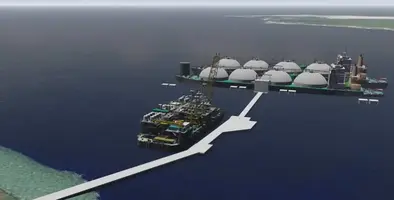
Exports begin from GTA Phase 1. (Image source: bp)

The deepest offshore development in Africa, GTA in Mauritania and Senegal generated the first cargo of liquefied natural gas (LNG) for bp to be sent for export markets

First gas had flown from the GTA Phase 1 project earlier this year. 

A project considered of strategic national importance, GTA Phase 1 boasts gas resources of approximately 2.4 mn tonnes of LNG per year of which considerable gas volumes are allocated for the domestic markets in both countries.

“This is a very proud day for Mauritania and Senegal. Throughout the development of this project, we have built strong relationships with the project’s host governments, local communities and our partners, and we look forward to strengthening these in years to come as we continue ongoing operations,” said Dave Campbell, bp's senior vice president for Mauritania and Senegal.

This first cargo of LNG at GTA is the third upstream major project start-up of the year for bp. These are the first of 10 expected by the end of 2027, in line with bp’s strategy of growing its upstream oil and gas business.

“This first cargo from Mauritania and Senegal marks a significant new supply for global energy markets. Starting exports from GTA Phase 1 is an important step for bp and our oil and gas business as we celebrate the creation of a new production hub within our global portfolio.

“This is the culmination of years of work from the entire project and operations teams – congratulations to all who were involved in safely reaching this landmark. I would also like to thank the governments of Mauritania and Senegal, and our partners – Kosmos Energy, PETROSEN and SMH – for their ongoing support and collaboration,” said Gordon Birrell, executive vice president, production & operations.

The first shipment of LNG was transferred to a carrier from the project’s floating liquefied natural gas (FLNG) vessel located 10 kilometres offshore, where the natural gas had been cryogenically cooled, liquefied and stored.


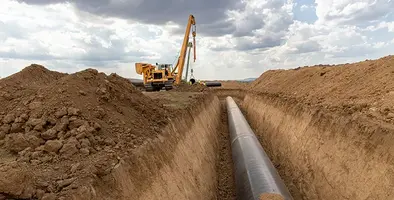
The study will include environmental and social evaluation. (Image source: Adobe Stock)

The 4000km-long Trans-Saharan Gas Pipeline (TSGP) will undergo a feasibility study update from international energy consultancy, Penspen, which will gauge the regional gas market in terms of economic and financial aspects to make a cost estimation

There will also be environmental and social evaluation, including legislation and consultation reviews, risk analysis, and development of scope of work for the front-end engineering design (FEED).

Jointly sponsored by the Nigerian National Petroleum Company (NNPC) Limited (Nigeria), SONATRACH (Algeria) and SONIDEP SA (Niger), the TSGP runs from Nigeria to Algeria. The project will be able to supply up to 30 bn cu/m of natural gas across West and North Africa annually, before it goes to European markets.

Arun Behl, Penspen’s sales and marketing director (Middle East & Africa) said, "The award of the feasibility study of this high-impact project underscores Penspen’s expertise in large-scale energy infrastructure development and our commitment to advancing strategic initiatives that drive economic growth and regional stability.

“We are proud to have been selected to support the next phase of this transformative project, leveraging our extensive experience in cross-country pipeline engineering and development to deliver a sustainable and efficient energy solution.” 

This will be a re-evaluation of the initial feasibility study, also conducted by Penspen, in 2006, following the project's initiation in 2002. Since then the pipe route has evolved to require an updated review in terms of current situations. Penspen is being supported inj its research work by fellow Sidara brand Dar. 

Besides the TSGP project, Penspen has been engaged in other mega pipelines initiatives, such as the Nigeria - Morocco Gas Pipeline (NMGP) among others. 


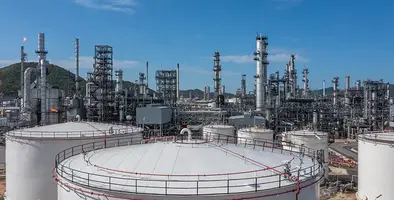
The financing will support the engineering, procurement and construction of the Afungi Peninsula-based project. (Image source: Adobe Stock)

An integrated liquefied natural gas (LNG) project in northern Mozambique has finally received a long overdue funding from the newly constituted board of directors of the Export-Import Bank of the United States (EXIM), which approved a direct loan of up to US$4.7bn that will cover export costs of US goods and services for the facility's development and construction

“I am pleased that in authorising this amendment the Bank finally fulfills the commitment EXIM made nearly six years ago to this Mozambique LNG project,” said the Bank's acting president and chairman Jim Cruse.

In a larger scale, the financing will support the engineering, procurement, and construction of the Afungi Peninsula-based project that comprises an onshore LNG plant, related facilities, and offshore activities. 

The Rovuma LNG Phase 1 project, which also belongs offshore Afungi Peninsula, is another prospective zone with natural gas liquefaction and export potential. Houston-based energy engineering company, McDermott International, has been handling the front-end engineering design (FEED) operations of the project. 

“LNG helps shape an entirely new era of energy solutions and McDermott plays a significant role in this global shift with more than 60 years of LNG experience,” said Rob Shaul, senior vice-president of McDermott's Low Carbon Solutions business. “McDermott is well established in Mozambique and can apply this knowledge and experience to continue the country's industrial, social and economic development.”

The Mozambique LNG project remains a vital investment for the US as it aims to diversify its international portfolio. 

Mozambique's LNG evolution has also warranted the rise of LNG technology companies in the region, such as Air Products. The company's dual mixed refrigerant LNG Process technology (AP-DMR) and equipment has been deployed at the Coral South floating liquefied natural gas (FLNG) plant, ensuring LNG production above 3.4 mn tons per year.


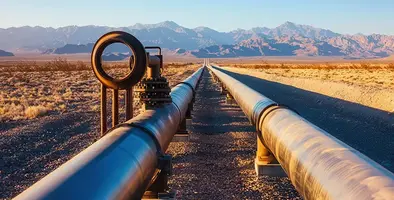
The ESIA approval will help advance pilot production activities. (Image source: Adobe Stock)

Invictus Energy Limited has announced that the Zimbabwe Environmental Management Agency (EMA) has approved the Environmental Social Impact Assessment (ESIA) for pilot production activities at the Cabora Bassa Project

Pilot production activities include the Eureka Gold Mine Gas-to-power Project and incorporates gas extraction, liquefaction, and transport from the Mukuyu gas field, as well as future extraction operations.

The approval provides a clear pathway for the commercialisation of gas resources from the Cabora Bassa Basin. Following the approval, the Company was issued with License No: L10000062291.

Invictus Energy managing director Scott Macmillan said, “The ESIA approval is a critical milestone for Invictus, and paves the way for the future development of the Mukuyu gas field and broader exploration license areas. We will now finalise pilot production planning, secure all necessary permits, and advance discussions with additional potential offtake partners.

Invictus remains committed to unlocking Zimbabwe’s gas potential and delivering long-term value to shareholders and the broader region.

I look forward to providing further updates as we advance these pilot production activities.”

Gas-to-power projects

The ESIA approval is a pivotal step towards the commencement of pilot production activities, including the Eureka Gold Mine gas-to-power project. This project is being developed in collaboration with Dallaglio (owner of Eureka Mine) and Himoinsa SA (onsite power generation provider to Eureka), leveraging Mukuyu’s gas resources to supply reliable and cost-effective power to the mine.

Invictus and Himoinsa SA have been actively engaging with various technology providers for gas processing, liquefaction, and logistics solutions to feed into the feasibility study, which is progressing in tandem. These engagements are aimed at identifying optimal technologies to maximise efficiency and commercial viability for the pilot production phase and subsequent large-scale development.

Initial Eureka gas-to-power project feasibility study results indicate a high look-through gas price exceeding US$10/GJ for gas-fired power generation, based on current grid tariff rates. This underscores the economic viability of the Mukuyu gas field as a strategic energy source for power generation in Zimbabwe and the broader region.

The ESIA expands on the initial 2019 assessment, which was one of the most extensive environmental studies ever undertaken in Zimbabwe. The 2019 study included rigorous field surveys and baseline measurements across multiple disciplines, including hydrology, ecology, environmental and archaeological assessments, hydrogeological and soil surveys, as well as socioeconomic and community consultations. Key stakeholders engaged during the assessment process included local leaders, relevant government ministries, and government extension offices.

The ESIA approval reinforces Invictus Energy’s commitment to responsible and sustainable resource development, ensuring compliance with stringent environmental and social governance (ESG) standards while advancing Zimbabwe’s domestic energy security.

More Articles …