According to a 2026 report by the International Energy Agency, global power demand is expected to grow by more than 3.5% annually through 2030
To support this need, Egypt aims to double its domestic crude output by 2030. Noting recent events worldwide, regional operators are prioritising production resilience and reliability to meet energy needs while adhering to governmental sustainability initiatives.
Investments in intelligent technologies underpin these efforts, positioning oilfield companies to continue operations while navigating local dynamics.
Scaling operational efficiency through automated engine management
At the operational level, smart technologies play an important role in helping drilling companies balance costs and sustainability objectives. Optimisation technologies, particularly advanced engine management solutions, enable operators to gain real-time insights into equipment performance and energy use. Rather than continuously running engines, which can negatively impact maintenance costs and equipment longevity, automated innovations can align engine output with demand to lower engine run hours, fuel consumption and related greenhouse gas (GHG) emissions.
Egyptian Drilling Company (EDC), which operates a fleet of over 70 rigs across Egypt, Saudi Arabia, Turkey and Kuwait, understands the far-reaching impact efficiency gains and GHG emissions reductions can have across a drilling fleet. These operational imperatives became the impetus for the company to closely collaborate with Mantrac Cat and Caterpillar to implement field-proven hardware with a dependable digital system to support key priorities.
EDC installed a Cat Smart Engine Management System (EMS) on its new 2,000-hp rig equipped with three Cat 3512B engines to curb fuel costs and optimize asset utilisation. This enabled EDC to continuously monitor power demand and adjust engine operation in real time: when demand is low engines shut off and when demand increases engines automatically come back online. This approach with Smart EMS is field proven to reduce engine runtime up to 25% and lower fuel consumption up to 10%.
These automated capabilities allowed EDC to achieve its goals. The company experienced 14% fuel savings when compared to similar rig and decreased engine runtime by 28% in six months. This supported lower GHG emissions and maintenance costs, and enabled EDC to extend the time between overhauls. Importantly, the operator achieved these efficiencies without compromising drilling performance or power availability.
Supporting strategic continuity for African energy assets
As operators navigate an increasingly complex energy landscape, smart technology is emerging as a pivotal enabler of operational performance and sustainability objectives.
Digital innovation via smart engine management can help local operators actively optimise fleets with resilience in mind to support overarching regional goals and energy security. Decreasing fuel consumption, engine runtime and GHG emissions while improving uptime and costs are foundational to long-term operational success in the industry as a whole – and to supporting national ambitions.
The article is written by Michael Weidenfeller, product strategy manager – Caterpillar Inc
Smart technologies supporting energy production aims in MEA
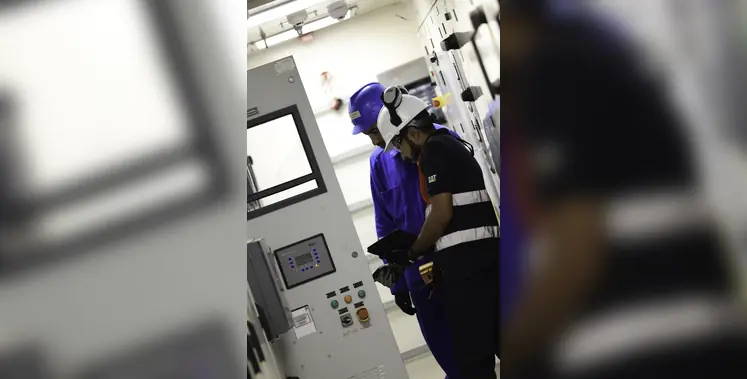
Companies collaborate with Mantrac Cat and Caterpillar to implement field-proven hardware. (Image source: CAT)