





Africa has dozens of green hydrogen projects planned, but many still lack financing, firm offtake deals and the infrastructure needed to reach FID, according to the Energy Industries Council’s latest Africa Hydrogen Report
Hydrogen realities are hitting Africa’s export push, with a lack of firm offtake agreements, insufficient pipeline infrastructure and a nascent local supply chain raising doubts over how quickly projects can move from plans to final investment decisions, the report says.
According to EICDataStream, a database of global energy projects in progress, there are 78 green hydrogen projects proposed across the continent, led by Egypt, Morocco and South Africa. Many African counties are beginning to position themselves as future suppliers of green hydrogen and its derivatives, such as ammonia, aiming to turn large solar and wind resources into exports for Asia and Europe. The governments within these countries are backing this with national strategies, energy agreements and major project announcements across these technologies even eyeing up the potential for green steel.
But the report shows the African hydrogen market still has a long way to go, with only two small-scale green hydrogen projects in operation, both in Namibia, running at a combined capacity of 17 megawatts.
The report puts Africa’s proposed electrolyser capacity at about 38 gigawatts, with around US$194bn of planned investment. Europe, by comparison, has more capacity planned but lower total capital costs ($166bn). This is because African project CAPEX includes major supporting infrastructure — including pipelines, power generation and desalination needed to secure water — which remains limited and needs significant buildout.Project concentration is also an issue. Egypt, Morocco and South Africa account for about 80% of Africa’s proposed hydrogen capital spending. Egypt alone represents close to half of the continent’s total, with US$88.5bn of planned investment, backed by a national low-carbon hydrogen strategy.
The report shows that North Africa’s hydrogen ambition is focused on exporting to Europe, while sub-Saharan Africa’s projects are dedicated to ammonia production and shipping to Asian markets such as Japan and South Korea.
The report stresses that many of these projects are still stifled by a lack of offtake agreements. “Offtake agreements are a critical factor in transitioning projects from pre-FID to construction,” according to the report’s authors, Jack Boggis, EIC energy analyst, and Chris Shirley, EIC market intelligence manager (Supply Chain). “Without revenue certainty, even well-located projects face delays to say the least.”
A key report recommendation is to reduce the reliance on mega-projects.Supply chain capacity is another constraint. Projects will rely heavily on imported equipment, given the lack of electrolyser manufacturers currently operating in Africa. However Egypt has set a 20% local content requirement tied to incentives and limiting the share of foreign labour on projects.
Rebecca Groundwater, EIC’s global head of external affairs, said Africa needs a clearer policy direction to move hydrogen projects into FID. “Governments need to stick to the basics investors need,” she said. “Set clear rules, keep policy stable, speed up permits, and get the basics in place on grid and water. Use finance tools that share risk and bring in development lenders where needed while costs are still high. And match project timing to what export buyers can take. Without that, a lot of this won’t go beyond concept.”
To view the full report, please visit: https://www.the-eic.com/MediaCentre/Publications/Reports
EIC report spotlights constraints on Africa's hydrogen development
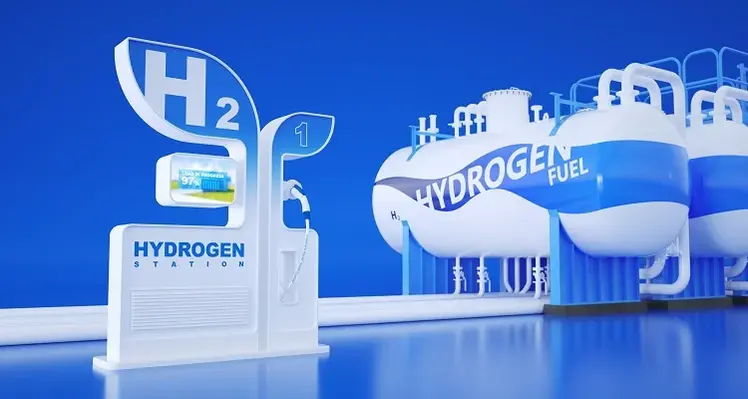
Africa has many green hydrogen projects planned, but few are moving to FID. (Image source: Adobe Stock)