





The global petroleum refining landscape is undergoing a monumental shift, driven by geopolitical volatility and the emergence of massive new downstream infrastructure in developing markets.
At the centre of this transformation is Nigeria’s Dangote Petroleum Refinery, which has just announced a staggering US$4.73bn net profit for the first nine months of 2026. This dramatic financial turnaround arrives precisely as the organisation asks investors for US$1.6bn in what is slated to be the largest initial public offering (IPO) in African history.
Global Supply Disruptions and the Refining Catalyst
Historically, West Africa has relied heavily on imported refined fuels from Europe, the United States, and the Middle East to meet its domestic energy requirements. However, recent geopolitical tensions, most notably the Iran war, have severely disrupted Middle Eastern refining operations and petroleum product exports.
These supply chain bottlenecks have sent global product margins sharply higher throughout the year, with a particularly intense spike in the profitability of diesel and jet fuel. Rather than falling victim to these shortages, newly commissioned infrastructure in West Africa has capitalised on the supply vacuum. By ramping up output, facilities in the region have begun exporting refined products directly into these global shortages, including significant jet fuel shipments successfully routed to Western Europe.
A Historic Financial Turnaround
Just a year ago, the Lagos-based mega-refinery was still absorbing heavy commissioning costs, posting a US$117.2mn loss during the same nine-month period. Today, the operational reality paints a drastically different picture. By successfully processing greater volumes of crude oil and capturing elevated refining margins on the global market, the company has transformed its balance sheet at an unprecedented pace.
The facility's fiscal transformation is underscored by several key performance metrics:
Revenue Growth: Total revenue more than doubled year-on-year, surging from US$9.19bn to an impressive US$22.48bn.
EBITDA Expansion: Earnings before interest, taxes, depreciation, and amortisation skyrocketed to US$5.52bn, up from just US$627.6mn a year earlier.
Cash Flow Generation: Operating cash flow reached US$3.68bn through September, compared with a mere US$364.7mn previously.
Debt Reduction: The organisation finished the period with US$650.8mn in net cash, completely reversing the US$1.73bn in net debt it carried the previous year.
Liquidity: Total cash holdings for the enterprise have now reached a robust US$6.69bn.
Africa’s Largest Initial Public Offering
These exceptional financial figures have landed right in the middle of the refinery’s highly anticipated IPO. The company is actively seeking to raise US$1.6bn in a public offering that places an overall valuation on the refinery of approximately US$47bn.
The market response has been exceptionally strong. Initially scheduled to close on the 13th of October, the subscription period has been officially extended through the 27th of October. This two-week extension was necessitated after heavy and enthusiastic investor demand effectively overwhelmed several Nigerian investment platforms when the offering first opened to the public.
Securing Regional Independence and Future Expansion
The capital generated from the IPO is already earmarked partly for the facility's next ambitious expansion phase. While the 700,000-barrel-per-day (bpd) refinery was already running near 660,000 bpd earlier this year—up from its original 650,000 bpd design—leadership has set a far higher target. By 2029, the company intends to double its total refining capacity to 1.4 million bpd. Once completed, this expansion would firmly position the Lagos complex among the very largest single-train refineries in the world.
Beyond the raw financial success, the strategic impact on the regional economy cannot be overstated. The facility has successfully and substantially cut West Africa’s historical dependence on imported fuel. Today, Nigerian product exports are increasingly displacing the millions of barrels that previously arrived via long-haul shipping routes. From navigating early commissioning hurdles to boasting billions in cash reserves and a line of eager investors, the enterprise has rapidly rewritten the narrative of African downstream energy production.
Dangote Refinery posts US$4.7bn profit ahead of record IPO
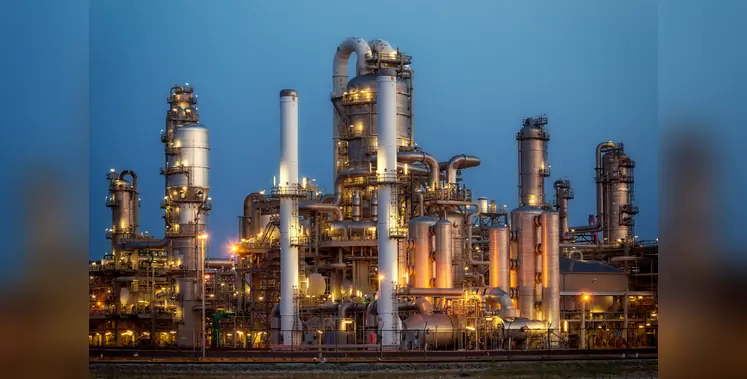
Nigeria’s Dangote Petroleum Refinery has just announced a staggering US$4.73bn net profit for the first nine months of 2026.