






Africa's evolving energy landscape
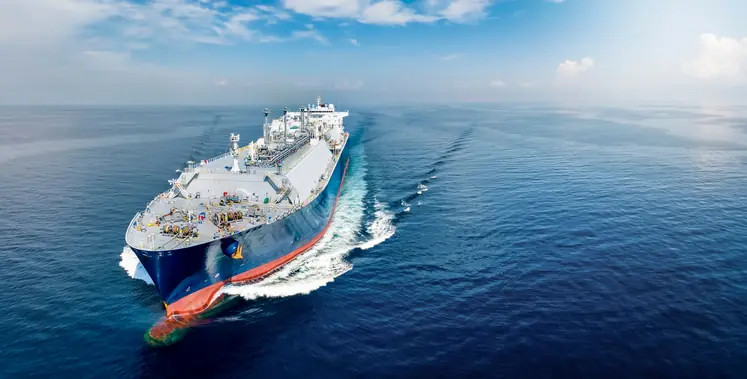
Africa's LNG ambitions are being tested by global turbulence.
Africa’s oil and gas sector is entering a period of accelerated transformation
The continent’s upstream potential, midstream ambitions and downstream vulnerabilities are all being reshaped by a global environment defined by geopolitical tensions, shipping disruptions, sanctions and shifting investment flows. These pressures are forcing African producers, national oil companies (NOCs), and policymakers to rethink strategy, timelines and risk management.
While Africa remains central to global energy security, the path forward is no longer linear. The continent’s energy landscape is evolving — and the pace of change is being set as much by global turbulence as by domestic policy choices.
New frontiers, new pressures
Africa’s upstream sector is experiencing both renewal and recalibration.
New frontiers are emerging as Namibia’s offshore discoveries continue to attract global attention. Ivory Coast's Baleine field is reshaping West Africa’s exploration map, and Uganda’s Lake Albert development is progressing toward first oil.
Traditional producers, however, are facing structural pressures. Nigeria continues to struggle with pipeline insecurity and feedgas constraints. Angola is restructuring Sonangol and revising its licensing strategy. Mature basins across North Africa require reinvestment to maintain output.
Geopolitical tensions have also altered investor behaviour. Sanctions, supply chain delays and financing constraints have made upstream investment more cautious, with international oil companies (IOCs) prioritising lower risk and faster cycle assets. This trend is visible in the shift toward short‑cycle offshore projects in West and southern Africa, and the cautious approach to long‑led developments in East and southern Africa. This has elevated the role of African NOCs, many of which are undergoing commercialisation reforms to attract capital and improve operational efficiency.
Regional integration challenges
Africa’s midstream infrastructure — pipelines, storage, and transport networks — is increasingly exposed to global and regional disruptions.
Pipeline vulnerabilities remain a major constraint. The Niger–Benin pipeline has faced security and political uncertainty. Nigeria’s pipeline network continues to suffer from vandalism and theft. Chad-Cameroon pipeline operations have been affected by governance disputes.
Meanwhile, regional midstream ambitions are advancing but unevenly. The East African Crude Oil Pipeline (EACOP) remains a flagship project but faces financing and environmental scrutiny even as it progresses. The West African Gas Pipeline continues to struggle with reliability issues. The TransSaharan Gas Pipeline remains aspirational amid security concerns.
Geopolitical tensions have also disrupted traditional shipping routes. Some carriers have begun rerouting cargoes toward East African ports, including Kenya, as part of broader adjustments to avoid Red Sea insecurity. While still evolving, these shifts highlight Africa’s growing role as both a transit and destination market in a fragmented global logistics environment.
Refining gaps and market fragility
Africa’s downstream sector remains structurally vulnerable. The continent imports a significant share of its refined petroleum products, leaving domestic markets exposed to global price volatility and supply disruptions.
The closure of several South African refineries has increased import dependence. The Dangote Refinery in Nigeria is expected to reshape regional product flows once fully operational. Uganda, Angola and Senegal are pursuing new or upgraded refining capacity to reduce import reliance.
Global geopolitical tensions — including sanctions, shipping disruptions, and insurance volatility — have amplified downstream fragility. Countries with limited storage capacity or heavy reliance on imported diesel and petrol have faced periodic supply tightness and pricing pressure.
LNG opportunity under stress
Gas remains Africa’s most promising transition fuel, but the continent’s LNG ambitions are being tested by global turbulence. Mozambique LNG remains delayed due to security concerns and cost escalation. Senegal–Mauritania’s GTA project has experienced timeline adjustments. Tanzania’s LNG negotiations have regained momentum after years of stagnation. Nigeria LNG faces feed-gas constraints and maintenance backlogs.
Global shipping insecurity — particularly in the Red Sea and Suez Canal — has increased voyage times, insurance premiums and charter rates. Some LNG and petroleum cargoes have been rerouted around the Cape of Good Hope, adding significant cost and delay. These pressures complicate Africa’s efforts to position itself as a reliable LNG supplier in a competitive global market.
NOCs at a crossroads
National oil companies are becoming more central to Africa’s energy future as IOCs rebalance portfolios.
Nigerian National Petroleum Company Limited has taken major commercialisation efforts in Nigeria. Sonangol is restructuring and divesting asset in Angola. Ghana National Petroleum Corporation has expanded its role in Ghana’s upstream sector. ENH (Mozambique) and the National Hydrocarbons Corporation of Cameroon are navigating complex LNG and gas monetisation strategies.
NOCs are facing the dual challenge of delivering national energy security and revenue stability, and competing for capital in a world increasingly shaped by ESG pressures and geopolitical risk. Their ability to modernise governance, improve transparency and manage complex partnerships will determine the pace of Africa’s energy transformation.
The new risk landscape
Africa’s oil and gas sector must now operate within a risk environment defined by:
- Shipping insecurity and rerouting pressures
- Supplychain fragmentation and equipment delays
- Sanctions exposure affecting financing and trade
- Insurance volatility, including rising warrisk premiums
- EPC delays and cost overruns
- Contractual disputes, including force majeure and hardship claims
- Financing constraints as lenders reassess geopolitical risk
These risks are not temporary. They represent a structural shift in how global energy markets function — and African producers ought to adapt accordingly.
Shift in strategies
Africa remains central to global oil and gas supply, with vast reserves, growing domestic demand, and strategic geographic positioning. But the continent’s energy future will depend on its ability to navigate a world where geopolitical tensions, shipping disruptions and investment realignments are the new normal. This will require stronger regional cooperation, diversified supply chains, modernised NOCs, increased private sector involvement, resilient midstream infrastructure and flexible commercial strategies.
Africa’s energy landscape is evolving — and those who adapt early will shape the continent’s next chapter.
The article has been written by Elijah Paul RukidiMpuuga, FCIArb (UK), founder and principal, Equitas Dispute Resolution Group