




The global energy landscape is undergoing profound shifts, driven by a decade of underinvestment in exploration and production that has been further exacerbated by geopolitical conflicts in Ukraine and the Middle East.
In response to these pressures, the Strategic Energy Report 2025 outlines a robust, dual-pronged strategy focused on African operations, balancing immediate, lower-risk production with long-term, high-reward exploration opportunities
Strategic Overview and Financing
The company’s core strategy balances lower-risk appraisal and development in proven basins with high-risk, high-reward exploration. In the near term, the priority is achieving 'first oil' at the Thali Production Sharing Contract (PSC) in Cameroon. Simultaneously, the company is maintaining selective exposure to promising exploration frontiers in Namibia and South Africa, a strategy validated by numerous major discoveries in the region since 2020.
To fund these developments and reduce the early-stage equity burden on shareholders, the company announced two major farm-out agreements in January 2025 with Prime Global Energies Limited. These transactions involve farming out a 42.5% interest in the Cameroon licence and a 25% interest in the Namibia licence, with both expected to complete in 2026. The South African licence already operates as a 50-50 joint venture with an industry partner.
Cameroon: Path to First Oil
Operational efforts in Cameroon are entirely focussed on the NJOM-3 well. The well's design and location have been optimised to target the thickest reservoir sections while minimising exposure to potential gas caps. The immediate operational plan is to drill, test, and then suspend NJOM-3 while preparing for further production wells and the installation of a Mobile Offshore Production Unit (MOPU).
Essential equipment, including a newly ordered mud-line suspension system, has already been delivered and safely stored at the port in Douala. While the final rig selection depends on receiving official documentation from the Ministry of Mines, Industries and Technological Development (MINMIDT), multiple rigs are available from late 2026 onward, making a Q4 2026 spud a distinct possibility.
Namibia: Seismic Analysis and Regulatory Approvals
In Namibia's PEL96 block, the company is evaluating options to acquire new, or reprocess existing, 2D seismic data to refine three specific areas of interest for future 3D seismic acquisition.
Operational progress has faced delays due to organisational shifts following the country's March 2025 presidential election. The new President created an Upstream Petroleum Unit (UPU) to oversee the Ministry of Mines and Energy (MIME) and develop adapted taxation and local content regulations. Despite these delays, the company reported in mid-May 2026 that the UPU has successfully completed its due diligence on their partner, Prime, and has recommended expediting the farm-out approval to the Minister. The company also successfully entered the First Renewal Period of the licence in June 2025.
South Africa: Awaiting Regulatory Clarity
Operations in South Africa remain in a holding pattern. The company and the wider industry are waiting for the resolution of environmental regulations and potential related litigation before they can initiate planned 3D seismic data acquisition over the deep-water section of the Algoa Gamtoos licence.
Operational Control and Sustainability Goals
The company strongly prefers to act as the operator of its assets to maintain strict control over costs and timelines. It keeps baseline costs low while retaining the ability to quickly scale up resources when project activity demands it by utilising flexible contracts with strategic partners like EPI for subsurface expertise and Bedrock Drilling for well management.
This operational growth is designed to align with the environmental and economic goals of the host nations. By increasing local oil and gas production, the company aims to support domestic economic development, significantly reduce reliance on liquid fuel imports, and displace less efficient, highly polluting diesel and fuel-oil power generation to help these countries meet their COP26 climate commitments.
Strategic Energy Report 2025 African oil and gas growth strategy
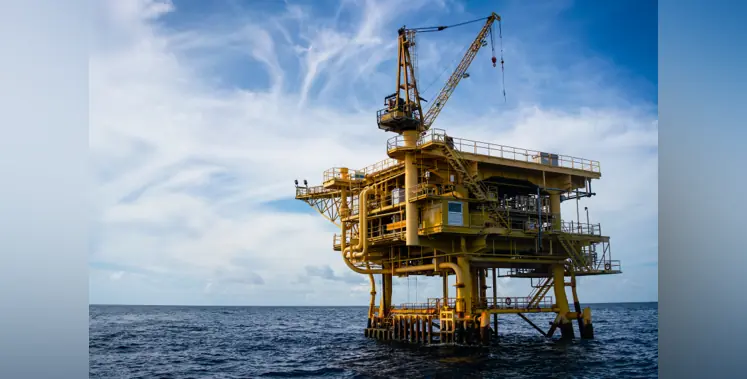
the Strategic Energy Report 2025 outlines a robust, dual-pronged strategy focused on African operations.