





West Africa's hydrocarbon landscape is shifting rapidly towards large-scale acreage commercialisation, and Senegal is now positioning itself at the very forefront of this regional drive.
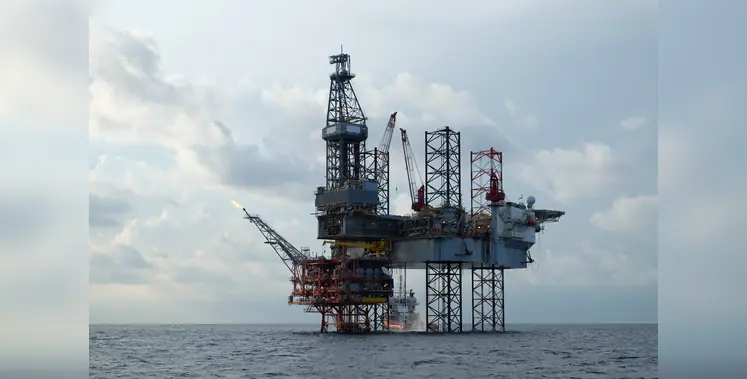
The Senegalese government has opened 104 oil and gas blocks to international investors, seeking new upstream exploration and production contracts to accelerate the development of its natural resources.
Announced by Energy and Petroleum Minister El Hadji Abdourahmane Diouf at African Energy Week (AEW) 2026 in Cape Town, the offering signals an aggressive push to draw foreign direct investment into the nation's energy sector while expanding domestic industrial capacity.
A Reorganised Acreage Landscape
The newly available assets stem from a major restructuring carried out earlier this year. In March 2026, Senegal reorganised its acreage into 113 distinct blocks, comprising 65 onshore and 48 offshore tracts. While Oil & Gas Middle East reported in September that 109 blocks were being marketed, the portfolio status has since crystallised:
- 104 blocks are actively open and available to international investors.
- 4 blocks are already held under existing petroleum contracts.
- 5 offshore blocks are currently assigned to Italian energy major Eni for technical evaluations.
Eni agreed to fund these technical assessments under a memorandum signed on the sidelines of Gastech. Crucially, the agreement functions strictly as a study framework rather than an upstream petroleum contract, conferring no automatic operational rights.
Addressing delegates in Cape Town, Diouf emphasised regulatory certainty, stating that the objective is to “show investors that Senegal remains the country it has always been: open, hospitable and respectful of international procedures.”
Fast-Tracking Yakaar-Teranga and Domestic Gas
Beyond newly delineated licensing blocks, Senegal is prioritising major offshore gas assets to anchor national electrification and industrialisation. The state is actively searching for commercial partners to advance the world-scale Yakaar-Teranga gas project alongside national oil company Petrosen.
Petrosen assumed complete operational control of the asset after Kosmos Energy withdrew in April. According to reporting by Ecofin Agency, the exit involved no financial compensation, leaving Petrosen’s leadership targeting initial commercial production between late 2028 and early 2029—a timetable viewed by several market analysts as optimistic.
The government views gas monetisation as an essential catalyst for broader economic transformation rather than a simple export play. As Diouf noted: “Our strategy is to build the value chain from the well to the factory, with gas at the heart of our industrial ambition.” Under this framework, Yakaar-Teranga will deliver feedstock for domestic power generation, industrial facilities such as fertiliser plants, and international liquefied natural gas markets.
Downstream Ambitions and Regional Integration
Senegal’s upstream momentum is matched by targeted downstream development intended to retain processing margins onshore. Diouf highlighted ongoing plans to construct a second domestic refinery dedicated to processing crude from the offshore Sangomar field, requiring an estimated capital investment of $2 billion to $3 billion (approximately AED 7.35 billion to AED 11.02 billion).
On 23 September in New York, the Société Africaine de Raffinage (SAR) signed a memorandum with Turkish contractor Yamata to develop the proposed four-million-tonne-per-annum refining facility. Similar to Eni’s offshore arrangement, reports have noted that this document remains a preliminary memorandum rather than a fully binding commercial contract.
Domestic integration and capacity building remain central conditions for incoming capital. Diouf explicitly urged new entrants to incorporate domestic suppliers and local labour into their operations from project inception. “Capital must earn a return. Senegal must gain a stronger economy. The partnership we seek must serve both purposes,” he affirmed.
Concurrently, Dakar is championing deeper regional collaboration across the MSGBC basin. Senegal intends to broaden the current five-nation alliance—comprising Senegal, Mauritania, The Gambia, Guinea-Bissau, and Guinea—into a larger regional energy coalition, establishing West Africa as a unified, competitive energy frontier.
Senegal launches 104 oil and gas blocks in major upstream push
The Senegalese government has opened 104 oil and gas blocks to international investors, seeking new upstream exploration and production contracts to accelerate the development of its natural resources.