vb

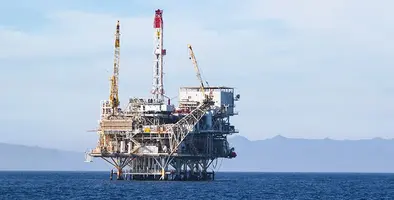
Rig141 has been booked again under a year-long extension.

Operations in the Gulf of Suez offshore Egypt continues as the Rig 141 by Shelf Drilling has been booked for another year by a 12-month extension

Worth around US$23mn, the rig will now be blocked untill February 2027. 

Shelf Drilling rigs are high in demand in West Africa as well. Last year the company bagged million dollar deals for campaigns in Nigeria and Angola. 

The rig will be used for drilling the Kharas appraisal well.

The Kudu appraisal well prepares for drilling as BW Energy, along with NAMCOR E&P, has contracted the Deepsea Mira semi-submersible rig for the campaign

The rig will also be used for drilling the Kharas appraisal well on the Kudu licence (PPL003) offshore Namibia in the Orange Basin, during the later part of 2025.

This comes as part of a rig-sharing agreement that was announced by Northern Ocean with Rhino Resources. The contract, entered into by BW Kudu Ltd, provides access to an in-country rig and an experienced services team with a strong track record in the Orange Basin, supported by a high level of local content.

BW Energy is the operator of the Kudu production licence (PPL003) with a 95% working interest. NAMCOR E&P, a subsidiary of the national oil company of Namibia, holds the remaining 5% carried interest.

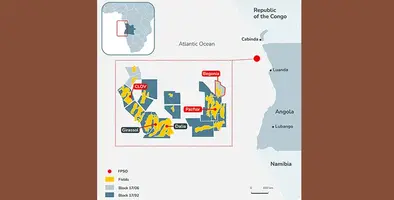
The two subsea tie-back projects will deliver additional production. (Image source: TotalEnergies)

TotalEnergies has begun production from the Begonia and Clov Phase 3 offshore projects, leveraging ullage in the Pazflor and Clov floating production, storage and offloading units (FPSO) to add a total of 60,000 barrels a day of new production

These two subsea tie-back projects deliver additional production leveraging available capacity on existing FPSO’s and as such have low marginal costs and low carbon intensities.

TotalEnergies is an Operator with a 30% interest in Begonia, which is the first inter-block development on Block 17/06 in Angola. A project made possible thanks to good cooperation between the Angolan concession holder Agencia Nacional de Petróleo, Gás e Biocombustíveis (ANPG), the partners of the block 17/06, Sonangol E&P (30%), SSI (27,5%), ETU Energias (7.5%), Falcon Oil (5%), and the partners of block 17 also operated by TotalEnergies.

Located 150 kilometers off the Angolan coast, Begonia is a 30,000 barrels per day project consisting of five wells subsea tied back to the Pazflor FPSO.

With a 38% interest, TotalEnergies is also the Operator of Clov Phase 3, continued upsides on Block 17. The company has announced the first oil from the development, in agreement with ANPG and its partners Equinor (22,16%), ExxonMobil (19%), Azule Energy (15.84%) and Sonangol E&P (5%).

Located 140 kilometers from the Angolan coast, Clov Phase 3 is a 30,000 barrels per day project consisting of four wells subsea tie-back to the Clov FPSO.

“TotalEnergies, operator of Block 17 and 17/06, continues to actively deliver its low-cost and low-emissions developments to grow its upstream production by more than 3% in 2025,” said Nicolas Terraz, president exploration and production at TotalEnergies. “With Begonia and Clov Phase 3, we are leveraging available production capacity in existing FPSOs of Block 17 (Pazflor and Clov) while reducing costs and emissions.”

“Good news for the country, as those two First Oils will help Angola maintain its production levels above 1 million barrel per day. Begonia is the first project between Blocks in Angola with a significant component of Local Content and Clov 3 is a great achievement resulting from intense work between the concessionaire and the B17 contractor group, operated by TotalEnergies. Projects like these are extremely important as they prove the innovative spirit and dynamism of the oil sector in Angola,” said Paulino Jeronimo, chairman of the Board of Directors of the National Agency for Petroleum, Gas and Biofuels.

The MoU will advance regional energy development in sub-Saharan Africa.

The Mnazi Bay North Block in southern Tanzania will undergo a technical assessment so that it can be developed for exploration and production opportunities by FIRST Exploration & Petroleum Development Company and the Tanzania Petroleum Development Corporation

Both the companies have signed a memorandum of understanding (MoU) to officialise the plan as an advancement of regional energy development in sub-Saharan Africa.

The MoU signing ceremony took place at the TPDC Head Office in Dodoma, with senior executives from both organisations, representatives of the Government of Tanzania, and members of the media in attendance.

Ademola Adeyemi-Bero, Managing Director/CEO of FIRST E&P, said, "Our success in Nigeria, built on deep technical expertise, a high-performance team, and an entrepreneurial mindset, has positioned us to deploy our capabilities beyond our home market. We believe Tanzania holds world-class hydrocarbon resources and its strategic location positions it as a natural energy hub for the region. With the right investments and partnerships, Tanzania can play a pivotal role in improving energy access, enabling cross-border distribution, and driving regional energy security across Sub-Saharan Africa.”

"We are confident that this MoU marks not just the beginning of a project, but the start of a long-term, mutually beneficial relationship between FIRST E&P and the government and people of Tanzania. We extend our sincere appreciation to TPDC for their collaborative spirit, professionalism, and openness throughout this process," said Adeyemi-Bero.

“The Petroleum Act of 2015 empowers TPDC to develop blocks independently or in partnership with strategic collaborators. TPDC has since identified key blocks, including Mnazi Bay, and we are working in close coordination with Petroleum Upstream Regulatory Authority (PURA), the Ministry of Energy, and TPDC to progress development. This MoU marks a first-of-its-kind upstream initiative, and we look forward to commencing exploration and production activities. With FIRST E&P’s support, we believe Tanzania’s upstream sector will be significantly strengthened,” said Godluck Shirima, Commissioner for Petroleum and Gas, Ministry of Energy, Tanzania.

Mussa Makame, managing director, Tanzania Petroleum Development Corporation (TPDC) said, “The reality we must acknowledge as Africans is that many of our people still rely on biomass for energy -- an option that poses serious risks to both health and the environment. Transitioning to gas is a critical step toward ensuring energy security for our communities. Developing our reserves is, therefore, a national priority. It is even more encouraging when African companies collaborate to unlock these resources, as it allows us to harness and benefit from them right here on our own soil.”

Gabon is anticipated to produce close to 1 million barrels of oil per day.

Gabon is pushing for deepwater oil and gas exploration to bring new projects online, and restore production decline in Central and West Africa

The newly appointed Minister of Oil and Gas of Gabon, Sosthène Nguema Nguema, has announced the administration's interests in tapping into the country's deepwater acreage, 72% of which remains unexplored. To get this going, existing petroleum laws are being revised to introduce fresh incentives for deepwater exploration and interests. 

The Gabonese Government is leveraging the Gabon Oil Company for a stronger ownership role and commercialising legacy assets with takeovers such as that of Carlyle owned Assala. Now, with the promotion of deepwater exploration in a global scale, Gabon will not only see a boost in production count but also the development of a new hub for refined product distribution in Central Africa.

Gabon is anticipated to produce close to 1 million barrels of oil per day. As the country boasts of more than 2 bn barrels of proven oil reserves, its current objective is to maintain a production count above 220,000 barrels per day for the short to midterm. This will become a lot easier with the advancement of deepwater exploration. Regulatory reform represents a cornerstone of the country’s exploration strategy, with potential improvements to petroleum legislation set to strengthen the competitiveness of investing in Gabon’s deepwater blocks. In 2019, the country introduced its Hydrocarbons Code. The new government seeks to go even further, recognising the presence of stiff competition from other offshore destinations globally. The code featured amendments to production sharing contracts (PSC), state profitability and tax, therefore providing a quicker path to profitability for foreign operators. Looking ahead, further revisions of this code stand to support new investment, encouraging deepwater exploration and new forays by global operators.

Major players are already active in Gabon, with ongoing developments underscoring the potential available across Gabon’s offshore blocks. Exploration and production company BW Energy, for example, signed PSCs for exploration blocks Niosi Marin and Guduma Marin in 2024, covering an eight-year exploration period with a two-year extension option. BW Energy and its partner on the block VAALCO Energy have committed to drilling one well as well as carrying out a 3D seismic acquisition campaign. BW Energy also has stakes in the Dussafu license, which features 14 producing wells tied back to a FPSO through a 20km pipeline. Partners on the license include the state-owned Gabon Oil Company (GOC) and Panoro Energy. Independent oil and gas company Perenco spud the Hylia South West discovery in Gabon in early 2024, revealing substantial oil-bearing columns in the Ntchengue Ocean reservoir. Chinese oil firm CNOOC launched wildcat drilling on Blocks BC-9 and BCD-10 in early-2023 on the back of 1.4 billion barrels of recoverable resource potential, with future discoveries set to double Gabonese oil production while de-risking deepwater exploration. Despite these developments, much of Gabon’s deepwater potential remains underexplored, highlighting a strategic opportunity for both active and potential players.

Increased hydrocarbon production in tandem with future deepwater discoveries are expected to support Gabon’s broader goals of creating a regional petroleum hub in Gabon. Strategically positioned on the West coast of Central Africa, Gabon is making strides towards enhancing oil and gas refining, storage and distribution capacity. Major infrastructure projects signal the country’s intention to become a petroleum hub. Notably, Perenco is advancing the development of the Cap Lopez LNG terminal in Gabon, targeting first production by 2026. Situated at the existing Cap Lopez oil terminal, the $2 billion project will introduce a FLNG vessel designed to monetize offshore gas reserves and reduce flaring. The FLNG vessel will feature a production capacity of 700,000 tons of LNG and 25,000 tons of LPG, supported by a storage capacity of 137,000 cubic meters. The project complements the Batanga LPG facility, which came online in December 2023 with a target production capacity of 15,000 tons of LPG annually. Beyond LNG and LPG, Gabon is working towards enhancing refining capacity with plans to expand its sole operating refinery – SOGARA – from 1.2 million tons to 1.5 million tons of crude. This expansion would enable the country to achieve self-sufficiency in refined petroleum products by 2030.


More Articles …