



cc.web.local

ADIPEC 2026 to mobilise investment in intelligent energy systems

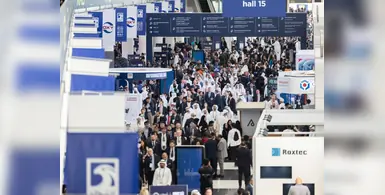
The event will convene the global energy industry in Abu Dhabi. (Image source: dmg events)

Held under the patronage of His Highness Sheikh Mohamed bin Zayed Al Nahyan, President of the UAE, in his capacity as Ruler of Abu Dhabi, ADIPEC 2026 will take place in Abu Dhabi from 2 to 5 November 2026 at ADNEC Centre Abu Dhabi

The event will mobilise investment in resilient and intelligent energy systems, with confirmed participation from ministers, CEOs and senior leaders across energy, technology, finance and industry.

The event will convene the global energy industry in Abu Dhabi as the world enters a new era of rising energy demand, geopolitical volatility, infrastructure constraints and the rapid expansion of artificial intelligence (AI), underscoring the critical importance of energy security to economic stability and growth.

As the world's largest energy conference and exhibition, and drawing on the UAE's position as a reliable energy supplier, long-term investment partner and global hub for technology and industry, ADIPEC 2026 will bring together policymakers, producers, investors, technology leaders and customers to turn shared priorities into practical action.

Across its conferences and exhibition, participants will align priorities, advance commercial partnerships and accelerate the projects and solutions needed to support secure, reliable and affordable energy supplies and long-term growth.

Among the early confirmed speakers for ADIPEC 2026 are: His Excellency Suhail Mohamed Al Mazrouei, Minister of Energy and Infrastructure, UAE; His Excellency Eng. Karim Badawi, Minister of Petroleum and Mineral Resources, Arab Republic of Egypt; His Excellency Saleh Kharabsheh, Minister of Energy and Mineral Resources, Hashemite Kingdom of Jordan; Rt. Hon Ekperikpe Ekpo, Minister for State for Petroleum Resources (Gas), Nigeria; Wael Sawan, CEO, Shell; Patrick Pouyanne, Chairman & CEO, TotalEnergies; Meg O'Neill, CEO, bp; Richard Jackson, President and CEO, Oxy; Claudio Descalzi, CEO, ENI; Christian Bruch, President and CEO, Siemens Energy; Wang Yuetao, Chairman, Zhenhua Oil; Olivier Le Peuch, CEO, SLB; Lorenzo Simonelli, Chairman and CEO, Baker Hughes; Horacio Marín, Chairman of the Board and CEO, YPF; Dr Angela Wilkinson, Secretary General and CEO, World Energy Council; Aliko Dangote, President & CEO, Dangote Group; Hunter Hunt, Chairman and CEO, Hunt Energy Holdings; Stuart Bradie, Chair of the Board, President and CEO, KBR; Dr Olivier Oullier, CEO and Co-founder, Inclusive Brains; and Prof. Haruhiko Ando, CEO, Japan Cooperation Center for Petroleum and Sustainable Energy.

Abdulmunim Al Kindy, Chairman of ADIPEC 2026, said, “Recent volatility has reaffirmed a simple truth: energy security is economic stability. As demand rises and AI transforms both the energy sector and the economies it powers, the world must invest ahead of demand, diversify supply and strengthen the infrastructure, technology and capabilities that keep energy moving.

“ADIPEC 2026 will focus on what the next energy system needs most: growth, reliability, intelligence and delivery. By bringing together policy, capital, technology and industry in Abu Dhabi, we will help advance the investments, projects and partnerships required to provide more energy, more securely and affordably, while supporting global economic growth.”

New for 2026, ADIPEC's Strategic Conference has been redesigned around the forces reshaping global energy, from rising demand and energy security to infrastructure, investment, AI, industrial execution and workforce capability.

Across 11 programmes and more than 380 sessions, ministers, CEOs, investors, policymakers and technology leaders will examine the decisions, partnerships and capital needed to expand energy supply, accelerate infrastructure delivery and strengthen long-term system performance.

New Strategic Conference programmes include Energy Security & Resilience; Policy, Regulation & Governance; Upstream; Clean Power, Molecules & Carbon Management; Grids, Infrastructure & Industrial Execution, and Workforce & Skills.

Existing programmes have also been updated to reflect the priorities shaping energy's next phase, including AI, Digital & Technology Innovation and Downstream, Chemicals & Industrial Value Chains.

The 11 Strategic Conference programmes are complemented by the Technical Conference, with its SPE Technical and Downstream Technical programmes, which together represent the world's largest gathering of technical energy engineers and experts to transform strategy into operational delivery.

Christopher Hudson, President, dmg events (organisers of ADIPEC), said, “As the global energy landscape continues to evolve, ADIPEC's role as a platform for dialogue, collaboration and commercial engagement has never been more important. Rising energy demand, supply constraints and rapid technological advancement underscore the need to bring industry leaders together to align priorities, mobilise investment and accelerate the projects and technologies required to support long-term energy security and economic growth.

“The strong early momentum behind ADIPEC 2026 reflects the industry's recognition of both the scale of the opportunity and the urgency for action. By convening policymakers, investors, technology leaders and energy producers in Abu Dhabi, ADIPEC will help strengthen partnerships, advance innovation and support the delivery of the secure, reliable and affordable energy systems the world needs.”

The ADIPEC Exhibition will serve as a global marketplace where connections translate into commercial outcomes. In 2025, the event generated US$53 billion in value through more than 49,000 deals, demonstrating its role in advancing investment, partnerships and project delivery.

With more than 2,250 companies already confirmed to participate – including 54 NOCs, IOCs, NECs and IECs – across 16 halls and 30 country pavilions, ADIPEC 2026 is set to be one of the most influential gatherings in the global energy industry, bringing together the technologies, collaboration and investment opportunities shaping the future of energy. Four specialised zones will connect market-ready technologies and solutions with customers, investors and partners, helping move projects from opportunity to execution.

ADIPEC 2026 to see strong showing from African government leaders

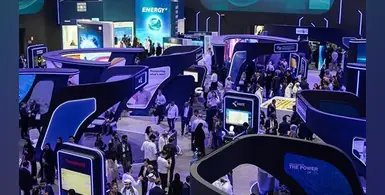
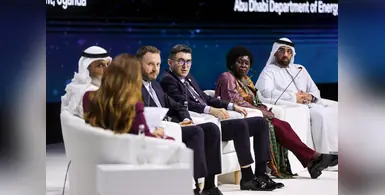
Energy leaders from across Africa will participate in the Strategic Conference. (Image source: dmg events)

The upcoming edition of ADIPEC 2026 will feature a strong contingent of African government leaders, underlining the continent's growing importance in shaping the future of global energy markets

Held under the patronage of His Highness Sheikh Mohamed Bin Zayed Al Nahyan, President of the United Arab Emirates, and hosted by ADNOC, ADIPEC 2026 will take place in Abu Dhabi from 2 to 5 November 2026, convening policymakers, industry executives, technology innovators and investors from around the world.

Senior ministers and energy leaders from across Africa are expected to participate in the event's Strategic Conference and high-level discussions, bringing perspectives from some of the world's fastest-growing energy markets. Their participation reflects increasing collaboration between African nations, the Middle East and international partners to expand energy access, attract investment and advance sustainable economic development.

Among the confirmed speakers are: Rt. Honourable Ekperikpe Ekpo, Nigeria's Minister of State for Petroleum Resources (Gas); Honourable James Opiyo Wandayi, Kenya's Cabinet Secretary for Energy and Petroleum; Honourable July Moyo, Zimbabwe's Minister of Energy and Power Development; and His Excellency Dr. Khalifa Rajab Abdulsadek, Libya's Minister of Oil and Gas.

Also participating are: His Excellency El Hadji Abdourahmane Diouf, Senegal's Minister of Energy and Petroleum; His Excellency Tiémoko Traoré, Mali's Minister of Energy and Water; and His Excellency Karim Badawi, Egypt's Minister of Petroleum and Mineral Resources. They will be joined by Proscovia Nabbanja, Chief Executive Officer of Uganda National Oil Company (UNOC), representing one of Africa's most closely watched emerging energy companies.

Africa is home to vast oil, gas and renewable energy resources and is expected to play a pivotal role in meeting rising global energy demand while supporting economic growth across the continent. Many countries are pursuing strategies that balance energy security, industrial development and emissions reduction, creating new opportunities for investment, technology deployment and cross-border collaboration.

At ADIPEC 2026, African leaders will engage with global decision-makers on topics including energy security, gas development, infrastructure investment, energy access, digitalisation and the pathways to a lower-carbon future. Their presence will reinforce ADIPEC's role as a leading platform for international dialogue and partnership, bringing together governments and industry to accelerate progress toward a more secure, affordable and sustainable energy system.

To register to attend ADIPEC 2026, visit https://www.adipec.com/

Namibia's local content drives NOGC 2026

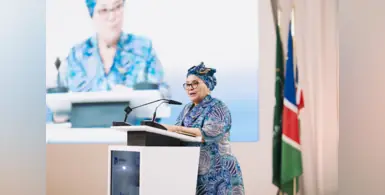
Lucia Witbooi, Vice President of the Republic of Namibia at NOGC 2026. (Image source: NOGC)

Local content in Namibia was first considered at a policy level in 2021, until back to back Orange Basin discoveries the year after pushed the Cabinet to formally sanction the structured development of a comprehensive framework

Thanks to high-profile discoveries like Shell's Graff-1 and TotalEnergies' Venus-1X fields, the sudden inflow of substantial foreign capital required channelising in a way that keeps benefiting Namibian locals across generations; this was addressed in the new framework. Following years of nation-wide consultations at both ministerial and industrial levels, the Cabinet has now approved the National Upstream Petroleum Local Content Policy. This will ensure legal security for local participation across the upstream petroleum value chain.

Namibia Oil and Gas Conference and Exhibition

Local content set the tone for the recently held Namibia Oil and Gas Conference and Exhibition (NOGC) in Windhoek, and factors that drove the sessions and conversations included: 

  • Capitalisation of petroleum opportunity

  • Generation of long-term national value

  • Advancing investments and businesses

  • Skills and jobs creation

“Discovery is not the destination. A resource beneath our waters becomes a national success only when it is responsibly developed and translated into tangible improvements in the lives of our people. It must become employment for Namibians, opportunities for our enterprises, skills for our young people, technology for our institutions, infrastructure for our economy, revenues for national development, and savings for future generations. This is why the theme of this conference is particularly appropriate,” said Lucia Witbooi, Vice President of the Republic of Namibia.

From Decision to Dividend: Making Namibia’s Oil Work for Namibians was the theme for the three-day conference hosted by the Economic Association of Namibia (EAN) in partnership with the Hanns Seidel Foundation (HSF) and the Namibia Investment Promotion and Development Board (NIPDB), with strategic partners the National Petroleum Corporation of Namibia (NAMCOR) and SNC Incorporated. The conference was officially endorsed by the Ministry of Industries, Mines and Energy.

“Our strategic plan for 2026 to 2030 carries one organising idea, which is to move this country from exploration to readiness, so that Namibia is ready onshore when production begins offshore. Namibia expects Namibian employment to be maximised, Namibian suppliers prioritised, skills and technology transferred, and meaningful Namibian participation, ownership and financing across the value chain.

"Fiscal certainty is a stable and transparent framework for petroleum revenues. Namibia does not move the goalposts. To our international partners: local content, properly done, is not a tax on your investment. An industry surrounded by capable Namibian suppliers, skilled Namibian workers and invested Namibian communities is an industry with social licence, political stability and a future measured in generations. That is what the policy builds, and my ministry will implement it with you, not against you. I am happy to state that our local banks have informed me that they are ready to receive bankable proposals from the oil and gas sector for their consideration,” said Modestus Amutse, the Minister of Industries, Mines and Energy. 

From exploration to development

Namibia is currently transitioning from exploration towards development, and local content remains the core of this journey. The administration is increasingly focusing on:

  • Enterprise participation

  • Skills exchange and development

  • Infrastructure building

  • Financing and investment

“Oil is not the point; oil is actually the how. Our people are the why,” said Jason Kasuto, chairperson of the Economic Association of Namibia and managing director of Monasa Advisory & Associates. 

The event saw Namibian business persons and policymakers strategising on ways to advance local participation at the Local Content Masterclass segment. There was also the NIPDB Local Content Pitching Session, where entrepreneurs pitched concepts and sought partnership opportunities with industry leaders and investors. Supplier workshops educated domestic businesses on international industry standards as the means to expand influence. 

Early confirmed speakers at ADIPEC 2026 demonstrate global relevance

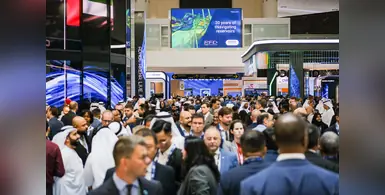
Early confirmed speakers at ADIPEC 2026 demonstrate global relevance. (Image source: DMG World Media)

As the energy sector navigates rising demand, geopolitical uncertainty, infrastructure pressures and rapid technological change, ADIPEC 2026 is set to bring together some of the world's most influential leaders from Africa, Asia, Europe and the Americas, to help shape the future of global energy systems

Held under the patronage of His Highness Sheikh Mohamed Bin Zayed Al Nahyan, President of the United Arab Emirates, and hosted by ADNOC, ADIPEC 2026 will take place in Abu Dhabi from 2–5 November 2026, convening policymakers, industry executives, technology innovators and investors from around the world.

Among the early confirmed speakers are a number of the energy sector’s most prominent voices, reflecting the diverse breadth of expertise and perspectives that will be represented across this year's programme.

Confirmed leaders include: Proscovia Nabbanja, CEO, Uganda National Oil Company; Wael Sawan, CEO, Shell; Claudio Descalzi, CEO of ENI; Osama Mobarez, Secretary General, EMGF; Olivier Le Peuch, CEO of SLB; Lorenzo Simonelli, Chairman and CEO of Baker Hughes; Horacio Marín, Chairman of the Board and CEO of YPF; Yoshinori Kanehana, Chairman of the Board of Kawasaki Heavy Industries; Dr Angela Wilkinson, Secretary General and CEO of the World Energy Council; Aliko Dangote, President and CEO of Dangote Group; Hunter Hunt, Chairman and CEO of Hunt Energy Holdings; Stuart Bradie, Chair of the Board, President and CEO of KBR; and Professor Haruhiko Ando, CEO of the Japan Cooperation Center for Petroleum and Sustainable Energy.

These leaders will contribute to an expanded Strategic Conference designed around the key challenges and opportunities shaping energy markets today. Featuring more than 380 sessions across 11 specialised programmes, the conference will explore topics including energy security and resilience, market stability, infrastructure delivery, investment, workforce development, industrial competitiveness and the growing role of AI in transforming energy systems.

New programmes for 2026 include Energy Security & Resilience, Policy, Regulation & Governance, Upstream, Clean Power, Molecules & Carbon Management, Grids, Infrastructure & Industrial Execution, and Workforce & Skills. Existing programmes have also been refreshed to better reflect evolving industry priorities, including AI, Digital & Technology and Downstream, Chemicals & Industrial Value Chains.

In parallel, ADIPEC's exhibition will bring together more than 2,250 companies across 17 halls, including 54 national, international, integrated and independent energy companies, alongside 30 country pavilions. New features such as an expanded AI Zone and an enhanced Low Carbon and Chemicals Zone will showcase technologies and solutions supporting the next phase of energy development.

Expected to attract more than 239,000 attendees, 1,800 speakers and 16,500 delegates, ADIPEC 2026 will serve as a global platform for the partnerships, investment decisions and innovations needed to strengthen energy systems and support long-term economic growth. 

Click here to register as an ADIPEC delegate or visitor.

Let Africa's energy transition be on African terms: Renaissance's CEO

Tony Attah, managing director and chief executive officer, Renaissance Africa Energy Company. (Image source: Alain Charles Publishing)

At international Energy Week in London, Tony Attah, CEO of Renaissance Africa Energy Company, gave an impassioned presentation calling for Africa’s energy transition to be on African terms, urging global support and hailing the divestment of energy resources from international ownership into African hands

Attah began by acknowledging the role of the energy transition to protect the planet and ensure sustainability, but emphasised the need for a just and equitable transition, respecting Africa’s current realities.
“We need to talk about Africa’s energy transition on African terms. We are not challenging the timelines that have been set by Europe and the rest of the world; we are only insisting that these goals be achieved in the way of Africa’s current realities,” he said.

Attah noted the dual changes in Africa: the energy transition itself and the new phase of African ownership and participation in energy systems. Discussing the global energy context, he noted the rising energy demand and fragility of global energy systems, as evidenced by the Russia Ukraine war. Energy demand is still rising, with consumption of all energy sources, both renewables and fossil fuels, hitting record levels. And while global CO2 emissions have reached record levels for a fourth consecutive year, Africa is contributing just 4% of those emissions, but is still paying the price.

The world, including Africa will need more energy due to population growth and the rise of living standards, with global energy demand projected to grow by around 50% between 2018 and 2050. Africa’s population forecast to rise by 67% between 2018 and 2050, from 1.5bn to 2.5bn with Nigeria’s forecast to double from 200 to 400mn in the same time frame, raising the stark possibility of an energy deficit.

Energy paradox

Attah highlighted Africa’s energy paradox, noting its rich energy resources but widespread energy poverty. “We have world class solar energy resources, 40% of the global solar resource base, strong wind, major hydro and geothermal prospects, critical minerals and substantial hydrocarbons, yet we face an energy paradox where millions of Africans remain energy poor and by implication socially and economically very poor. Over 500 million Africans, nearly 43% of the population, lack direct access to electricity, and over 850 million people lacking access to clean cooking solutions, relying on traditional biomass like wood and charcoal, with a negative impact on health.

800,000 people die annually in Africa due to lack of clean energy including 100,000 in Nigeria, he noted, where 80 million Nigerians lack access to electricity. The country loses over US$29bn a year due to unreliable power supply, and 60% of manufacturing costs are attributed to lack of energy.

Africa needs to define its energy transition based on its current realities, he said.

“You cannot decarbonise the system that you have not yet built, and you cannot transition from the energy you do not have. That is the reality. This is the narrative that we as Renaissance are seeking to help reshape and change in the interests of Africa.”

Turning to the foundation of Renaissance Africa Energy Co, which will celebrate its first anniversary this March, he explained that IOC divestment had enables its shareholders to acquire Shell Nigeria’s onshore shallow water assets, marking a transition from international to African operatorship. These assets have now been successfully operated over the last 11 months. He acknowledged the Nigerian government’s speedy approval of the divestments and the major reforms that have energised the industry, as well as the support of NNPC.

“As our name connotes, it’s a new beginning and perhaps the greatest opportunity for Nigeria and indeed Africa that this energy renaissance is African owned and Africa led,” he noted, adding that the company has a bold vision to be Africa’s leading energy company enabling energy security and industrialisation in a sustainable manner. “This mission will be underpinned by our core values of collaboration, respect, integrity, safety and performance.”

The company has increased oil production by 100,000 in 100 days and contributes 2bn scf of gas to the global gas market, and is working to set the company on a growth path aligned with Nigeria’s ambition to produce 2mn BOPD by 2027 and 3mn bopd by 2030.

“African companies are not just replacing international companies. We are redefining the objectives of the assets linking production to power, to industry, to jobs, domestic value and by implication, economic and social political stability of Africa.”

Need for global support

Attah underlined the need for global support to enable Africa’s energy transition, including finance, technology and reliable infrastructure, to enable Africa to convert potential into progress, highlighting that Africa is rich in resources, talent and ambition and noting its young population.

“Africa should be enabled to lead its energy future on its own terms,” he stressed. “If the world wants Africa to replace diesel and biomass as the main energy source, then gas to power, grids and domestic systems must be financed and supported to power industries with lower emissions. Africa needs proven technologies deployed at scale, designed for reliability and real operating conditions. Gas, renewables, storage, grids must work together as systems. Africa’s transition will endure only if we invest in people, governance and operating discipline so Africa-led companies deliver competitively and responsibly for decades to come,” he said. “This is why the current shift in ownership matters.”

Attah highlighted the need for Africa governments to create certainty, stability and an enabling environment for investors to thrive, and urged global business to partner with Africa for mutual benefit, to integrate global energy systems and global financial institutions and release funds to unleash growth.

“If we get this right, we will build globally, more robust energy systems that will power industries strengthen societies, deliver dignity and reduce emissions in a manner that will enable climate change goals to be achieved sustainability, at least looking through the Africa lens,” he concluded. “Africa’s energy transition will not slow the global transition, it will strengthen it, because when Africa powers its people, builds its industries and grows responsibly the world does not lose; if anything its wins, and the vagaries associated with Africa’s underdevelopment will be a thing of the past.

He ended with the rallying cry, “Let the Africa energy renaissance begin!”

More Articles …